The vibe
Family beaches
Calm water, real facilities, survivable parking. The kids live; you relax. Everyone wins.
Portugal · The Algarve
No. 12
Praia de Odeceixe
Worth a detour.
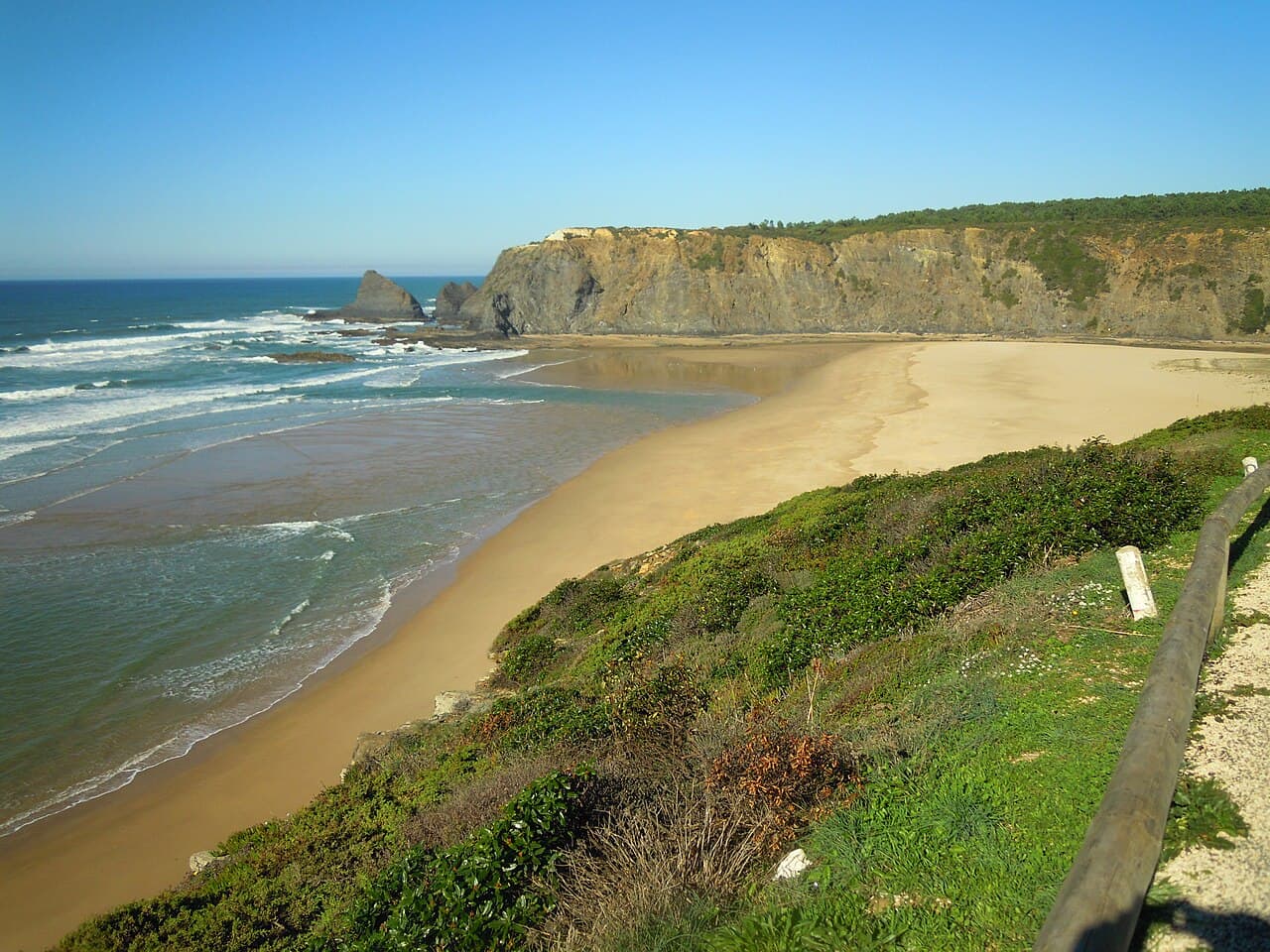
The last beach in the Algarve before you tip into the Alentejo, and the one that resets your standards. A river meets the sea here — you can swim in the warm creek with toddlers on one side, or brave the cold Atlantic on the other, separated by 50 meters of sand. The village behind it is a single street of white houses with a windmill. It's what the Algarve was before the budget airlines. Come here to remember.
Best: June–Sept →
Portugal · The Algarve
No. 14
Praia de Carvalhal
Only if you're already there.
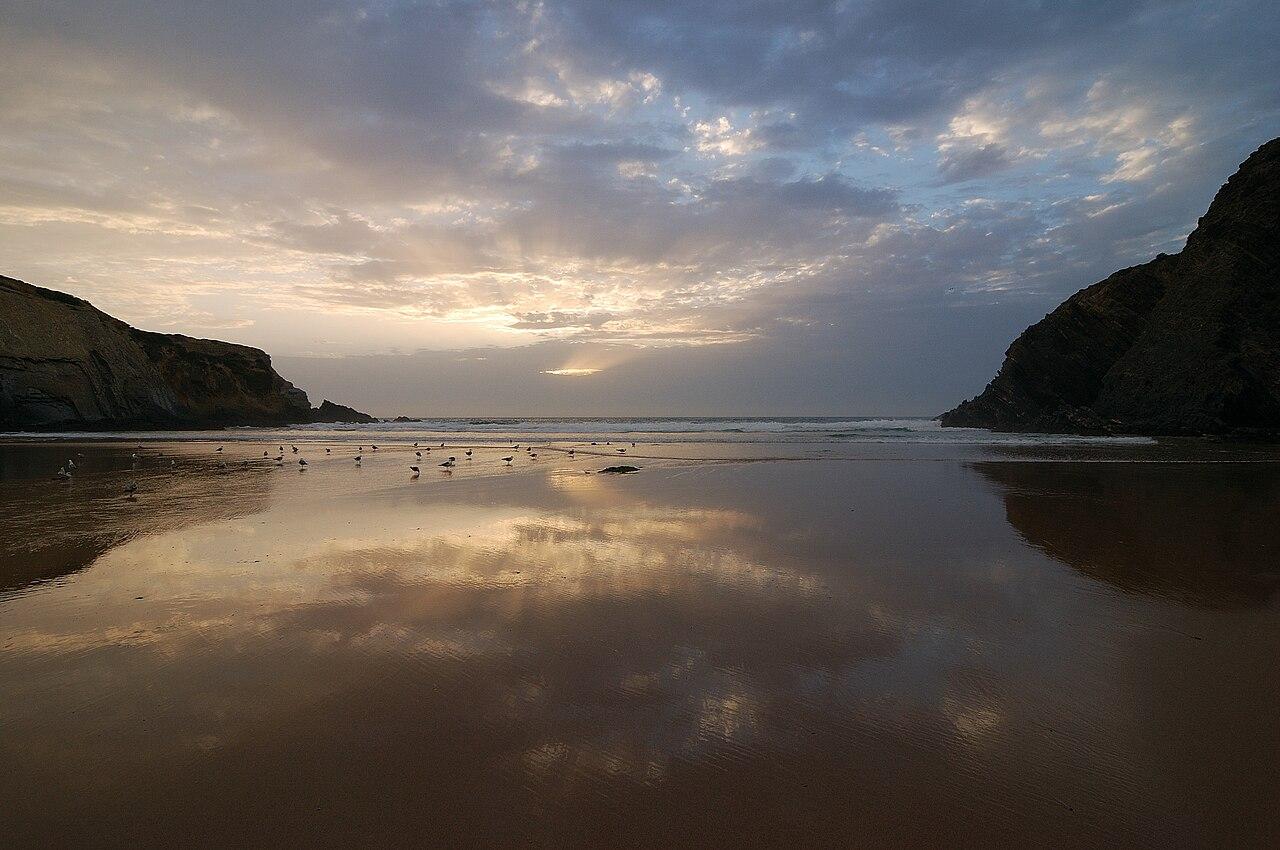
A wide, dune-backed beach on the Carvoeiro-to-Armação stretch — attractive, accessible, and exactly the kind of beach that exists in a thousand places but is pleasant in all of them. Wooden boardwalks over the dunes, two beach restaurants doing respectable grilled fish, and sand enough that the crowd spreads. Nothing to write home about. Plenty to come back to.
Best: May–Oct →
Indonesia · Bali
No. 1
Nusa Dua Beach
A public beach behind a security check.
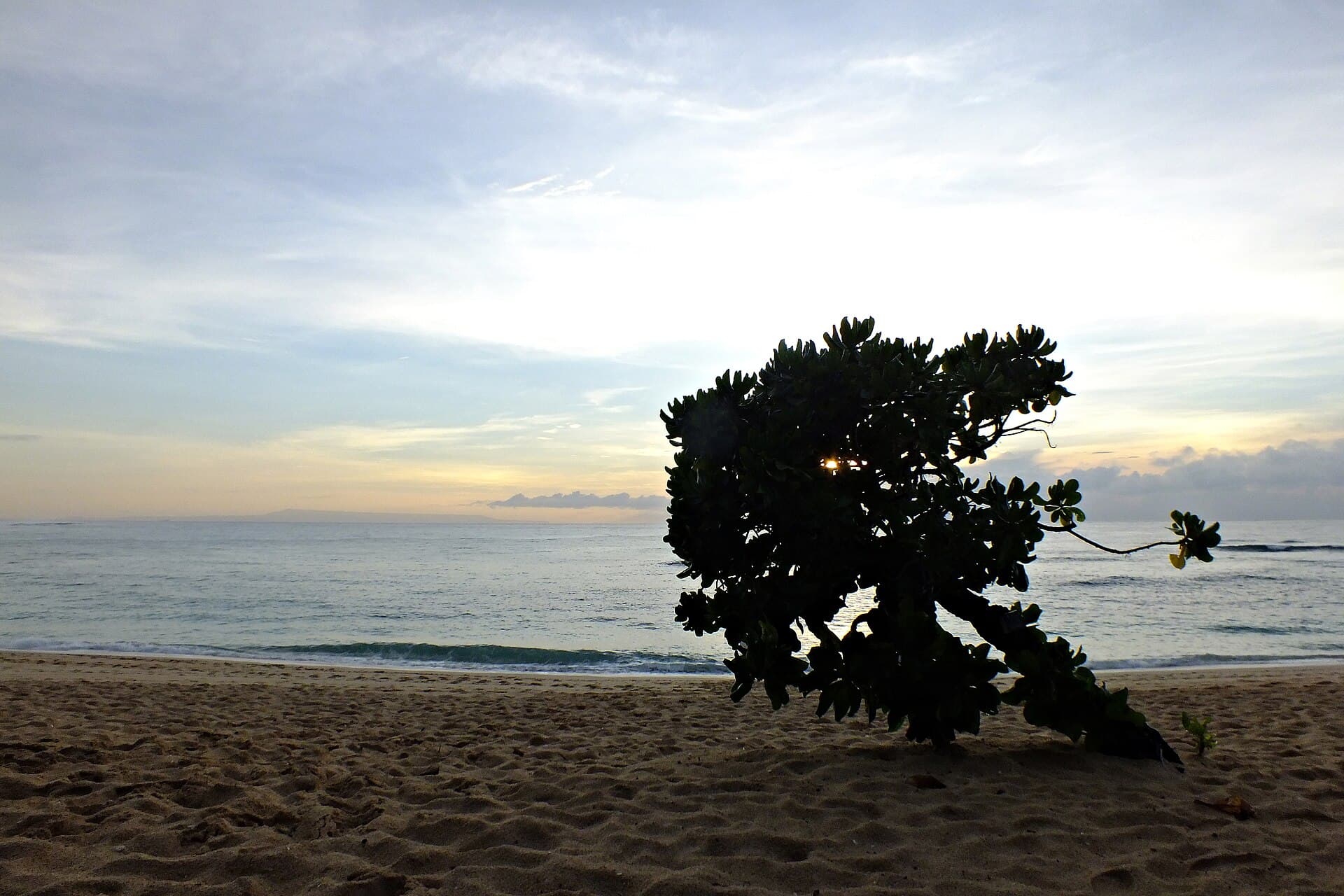
Nusa Dua Beach sits inside a gated resort area. You pass security checks at the main entrance, and after that the beach is free and open to anyone. The result is what its own guide calls quiet and orderly. We measured 4.7 km of sand, the biggest mapped beach in Bali. Type the name into a map and you may be sent to a hotel entrance, because several pins share it. At low tide the water gets very shallow in places and shows sharp coral, which is worth knowing before you wade in.
Best: March (30.0 °C), then April and December →
Indonesia · Bali
No. 2
Jimbaran Beach
Dinner on the sand, with everybody.
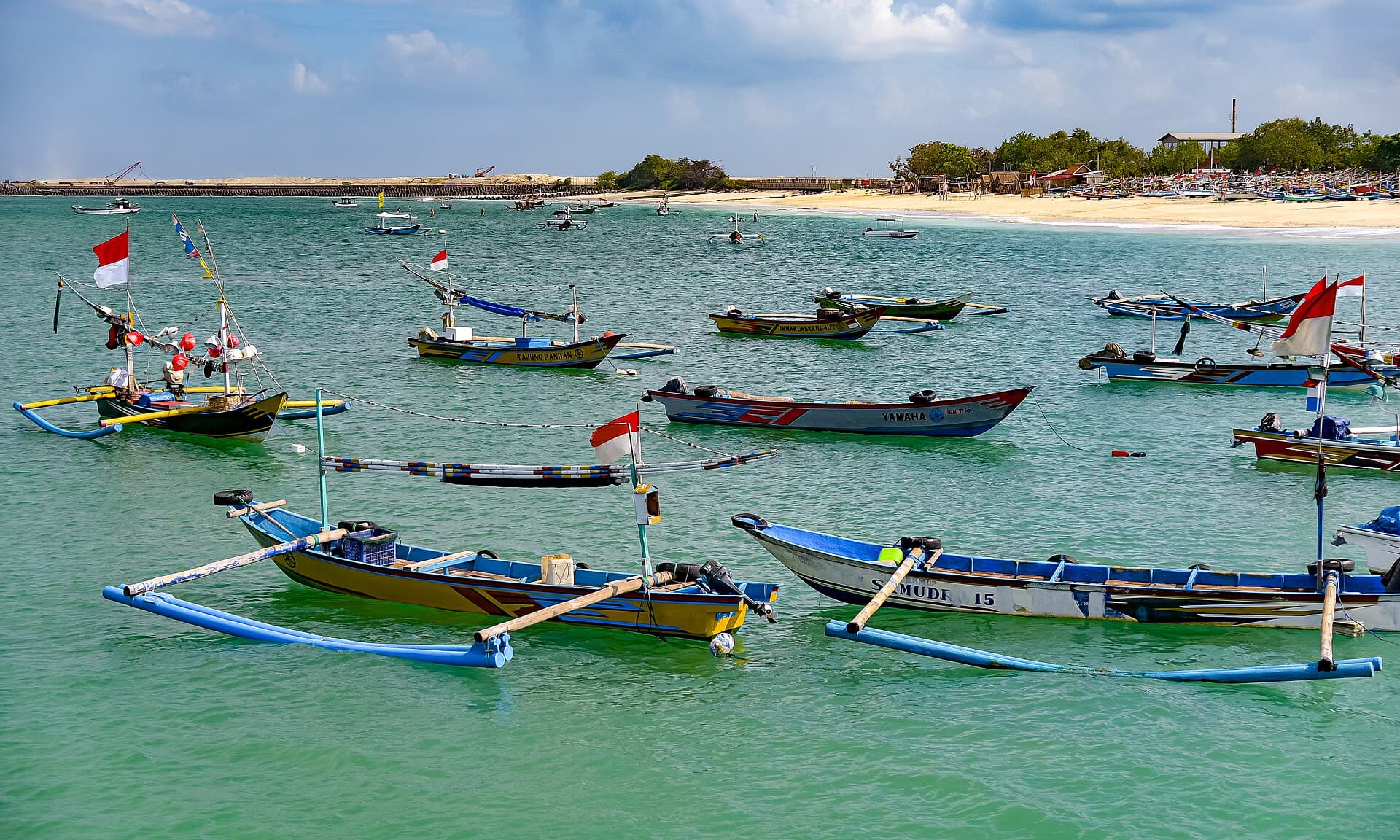
Jimbaran is the beach where, at sunset, the grills start smoking and the sand turns into one long row of tables. It is very crowded right before sunset for exactly that reason. The map labels this stretch Kedongan Beach; the lists call it Jimbaran, and so does everyone else. We measured 3 km of it. In December and January the ocean currents can bring in huge amounts of rubbish, which is not the season the photographs were taken in.
Best: April (29.9 °C), then December and March →
Indonesia · Bali
No. 6
Sanur Beach
Flat, long and up early.
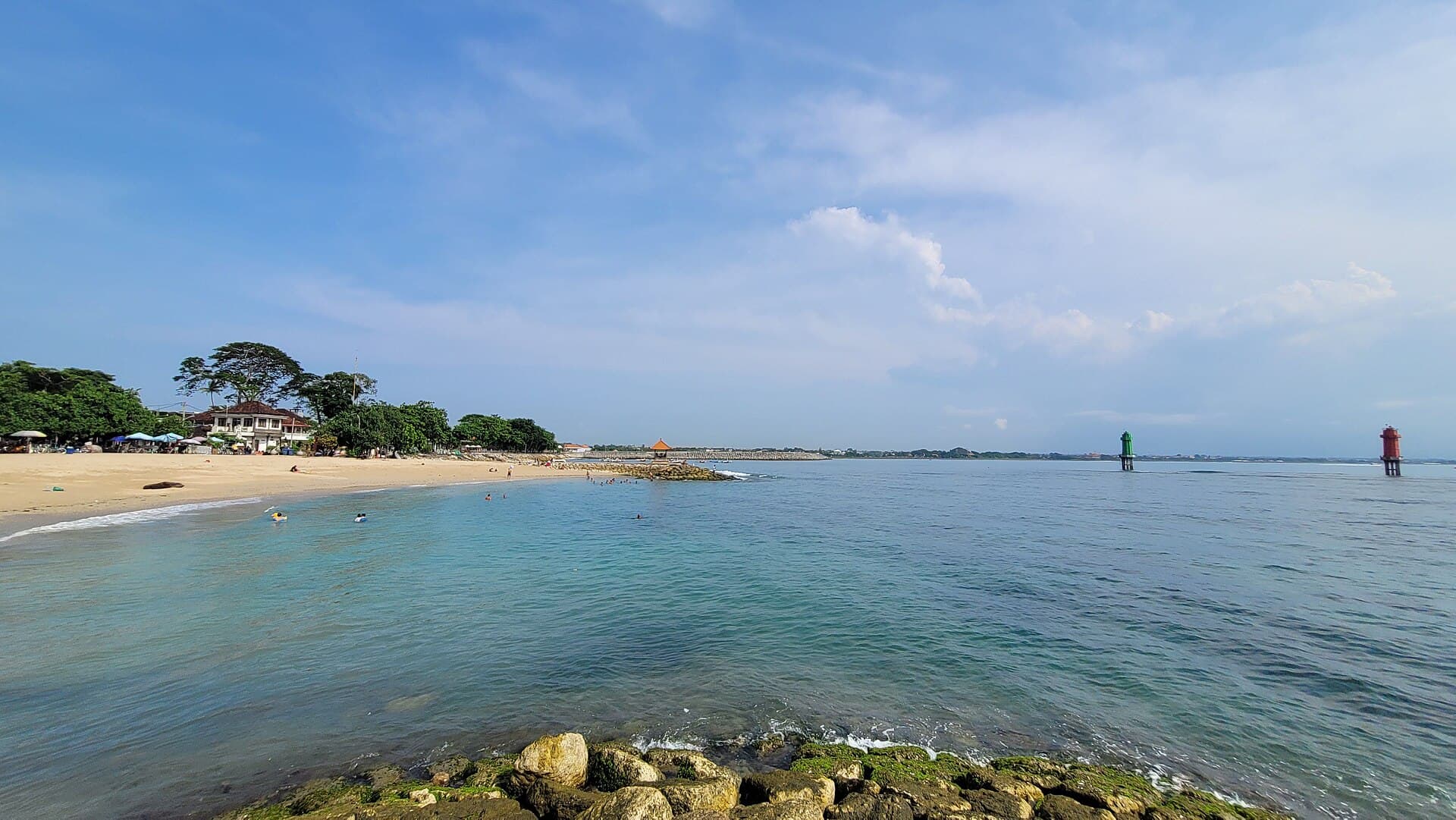
Sanur is a stretch of coast about 7 km long on Bali's east side, linked end to end by a flat beachfront path that people jog, cycle and beach-hop along. The piece of it the map draws as one beach measures 3.4 km. A few warungs at Sunrise Beach serve early breakfast on the sand. July and August are the busiest months, with families and the kite festival crowds. At the northern end, Padang Galak, there are no loungers or cafés: wide sand and big waves, better for a walk than a swim.
Best: April (30.1 °C), then March and December →
Indonesia · Bali
Pandawa Beach
Six statues in a cliff, and a ticket booth.
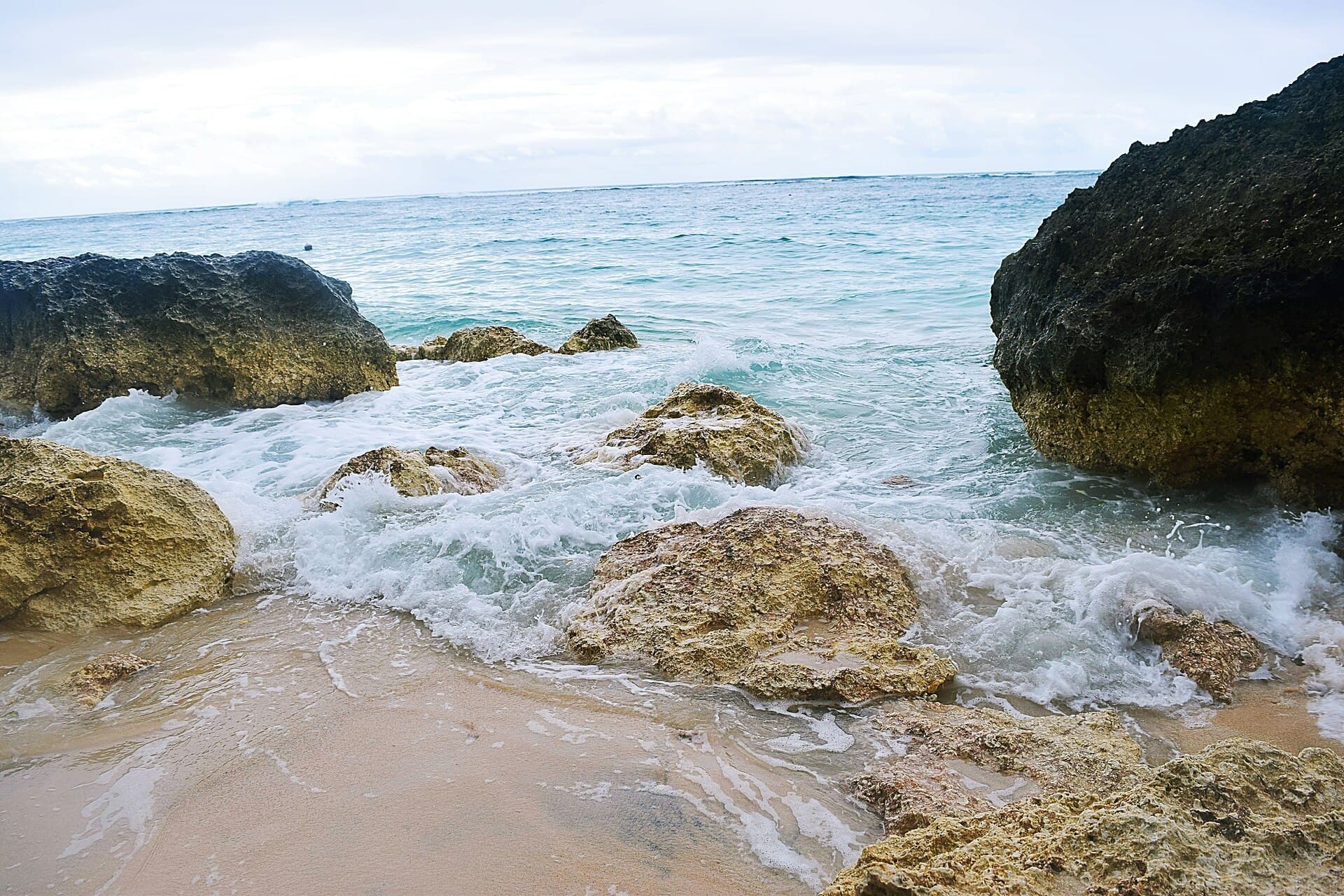
Carved into one side of the cliff above Pandawa are six large statues, each in its own niche, and the five Pandawa brothers are where the beach gets its name. It is no longer the quiet spot it was a decade ago. There is one main road down and you can drive almost to the beachfront. Seven lifeguards cover five points along the beach through the day. The entrance fee in 2026 is IDR 25,000 for an international adult, and the older prices of 10,000 and 15,000 are still all over the internet.
Best: April (29.9 °C), then March and December →
Portugal · Aljezur
No. 4
Praia de Odeceixe
A river on one side, the Atlantic on the other.
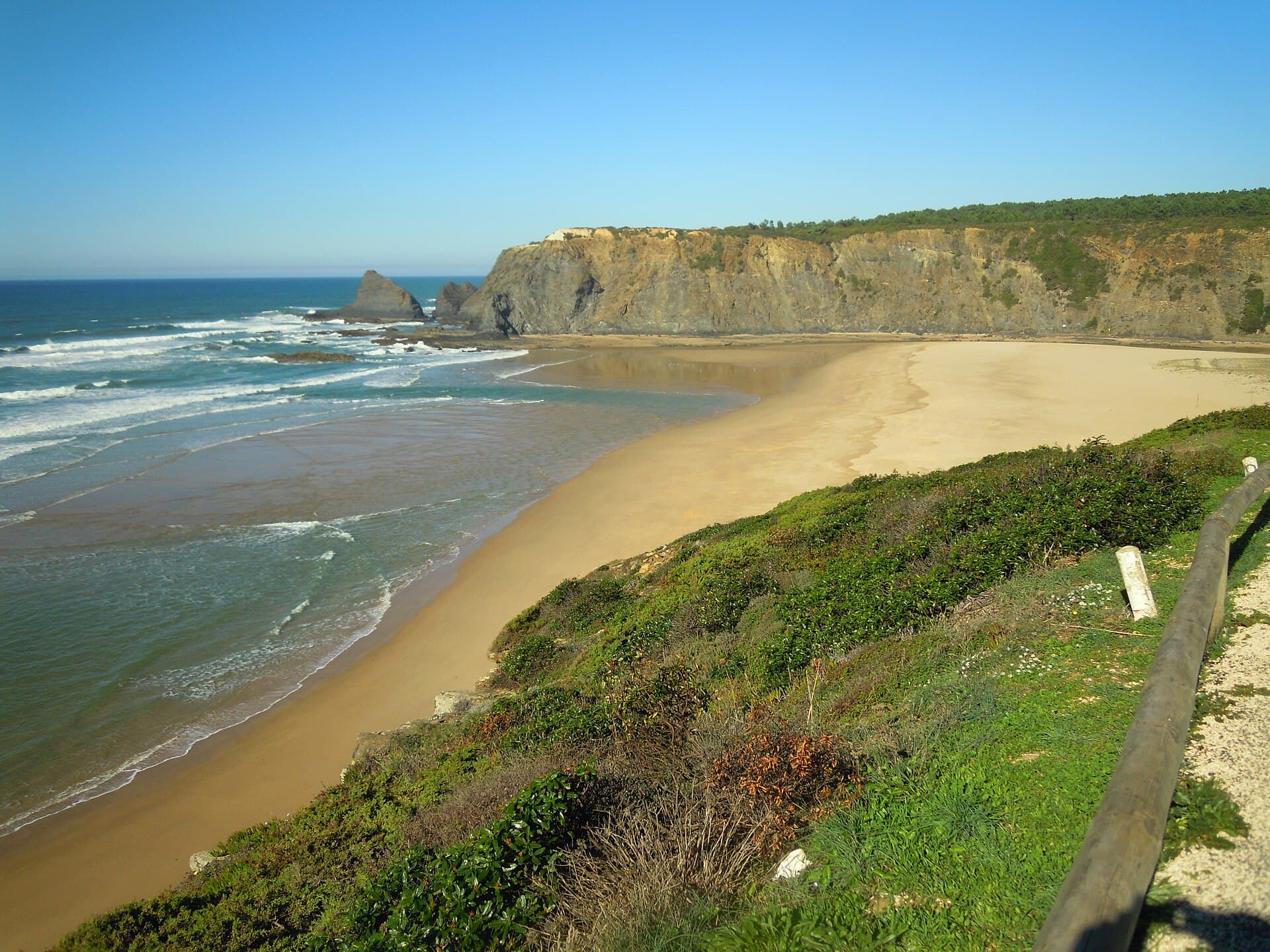
Odeceixe is the northernmost beach in the Algarve, right on the border with the Alentejo, where a calm river lagoon meets the Atlantic surf. That gives it two kinds of water. The ocean side stays at 16 to 19°C even in summer, with currents running along the beach, and the advice is to swim only in the lifeguarded zone. We measured 454 metres of sand, 165 wide, which is a lot of beach to cross before you get wet. A car is essential: there is no public transport, and the car park fills by mid-morning in peak season.
Best: August (18.6 °C), then October and November →
Portugal · Albufeira
No. 8
Praia da Falésia
Six kilometres, most of it spoken for.
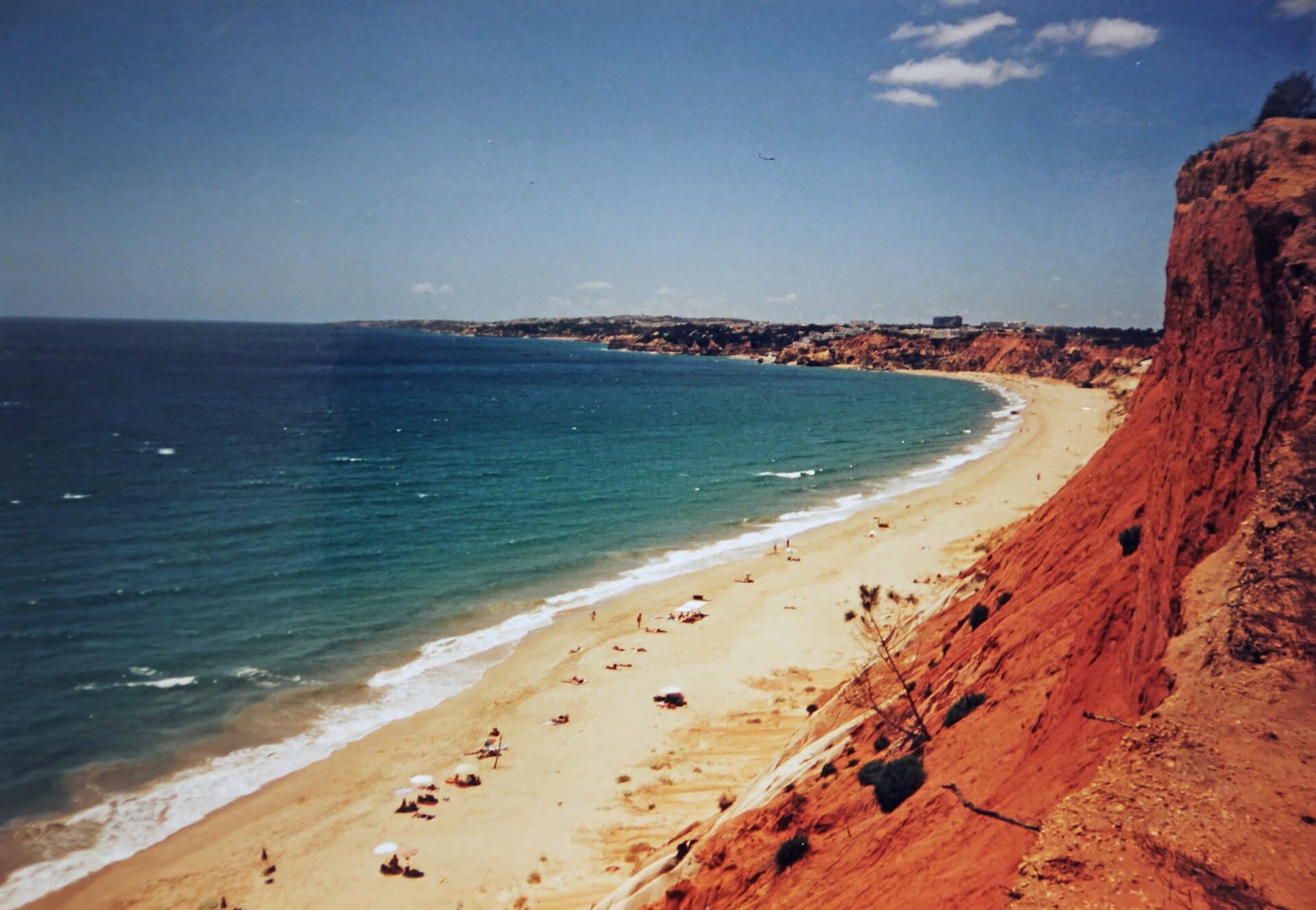
Praia da Falésia runs for six kilometres under sandstone cliffs that go from cream to deep terracotta, between Pine Cliffs near Vilamoura and Olhos de Água. Walking it end to end takes two to three hours. The piece the map labels Falésia measures 1.3 km. There are cliff stairs at Pine Cliffs, 60 steps, and at Açoteias, 80, and a flat way in from the village at Olhos de Água. From April to October the crowding index runs at 81 to 98%, and the guide itself suggests a quieter beach instead. East of Açoteias there are no facilities at all.
Best: August (20.1 °C), then July and October →
Greece · Crete
No. 2
Elafonisi Beach
Pink in places, protected everywhere.
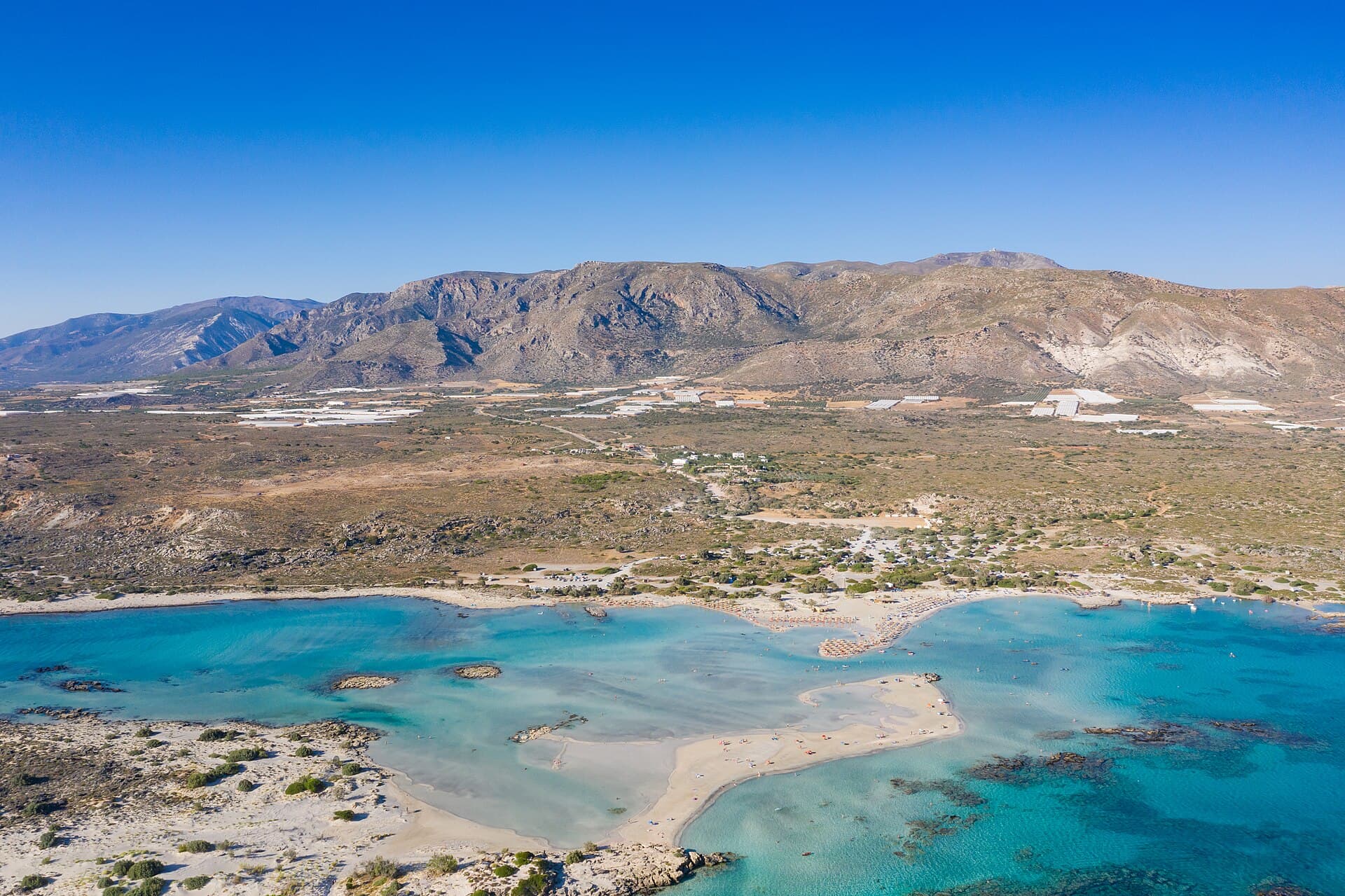
Elafonisi is second on Greece's fame list and the one beach here with a find no other has: its sand is pink in places, from the crushed shells of microscopic organisms called foraminifera. It is a protected nature reserve, and loggerhead turtles nest on it, so parts are fenced off. The road in is paved, narrow and full of turns, about an hour and a half from Chania airport. There is one taverna near the entrance selling snacks, two beach bars, free changing booths and toilets that cost 50 cents. It is very crowded in July and August. We measured 412 metres of sand.
Best: August (26.4 °C), then September and July →
Greece · Crete
No. 8
Falasarna Beach
Big enough that August does not fill it.
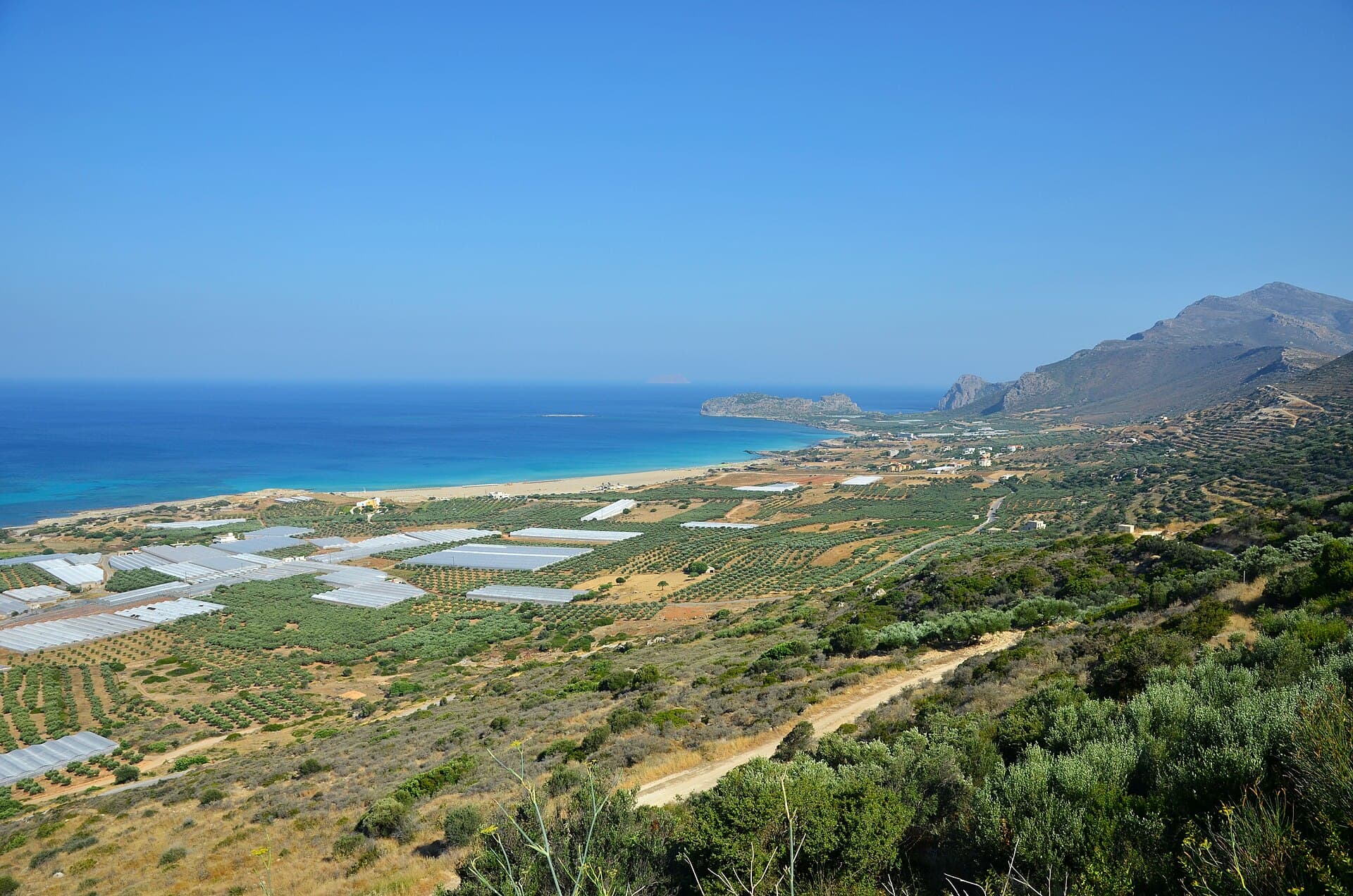
Falasarna faces directly west on the west coast of Crete, about 59 km from Chania and 17 km from Kissamos. It is large enough, by its guide's account, to never feel overcrowded even in August. We measured 908 metres of sand, 111 wide. There are beach bars and tavernas along the central and southern sections, and a standard set of two sunbeds and an umbrella runs €15 to €25. There is no sheltering lagoon here, so on windy days the waves grow considerably, which matters most for families with small children. On the first or second Saturday of August there is a beach party with a DJ.
Best: August (25.6 °C), then September and July →
Greece · Skiathos
No. 10
Koukounaries Beach
A lake and a bird reserve behind the sunbeds.
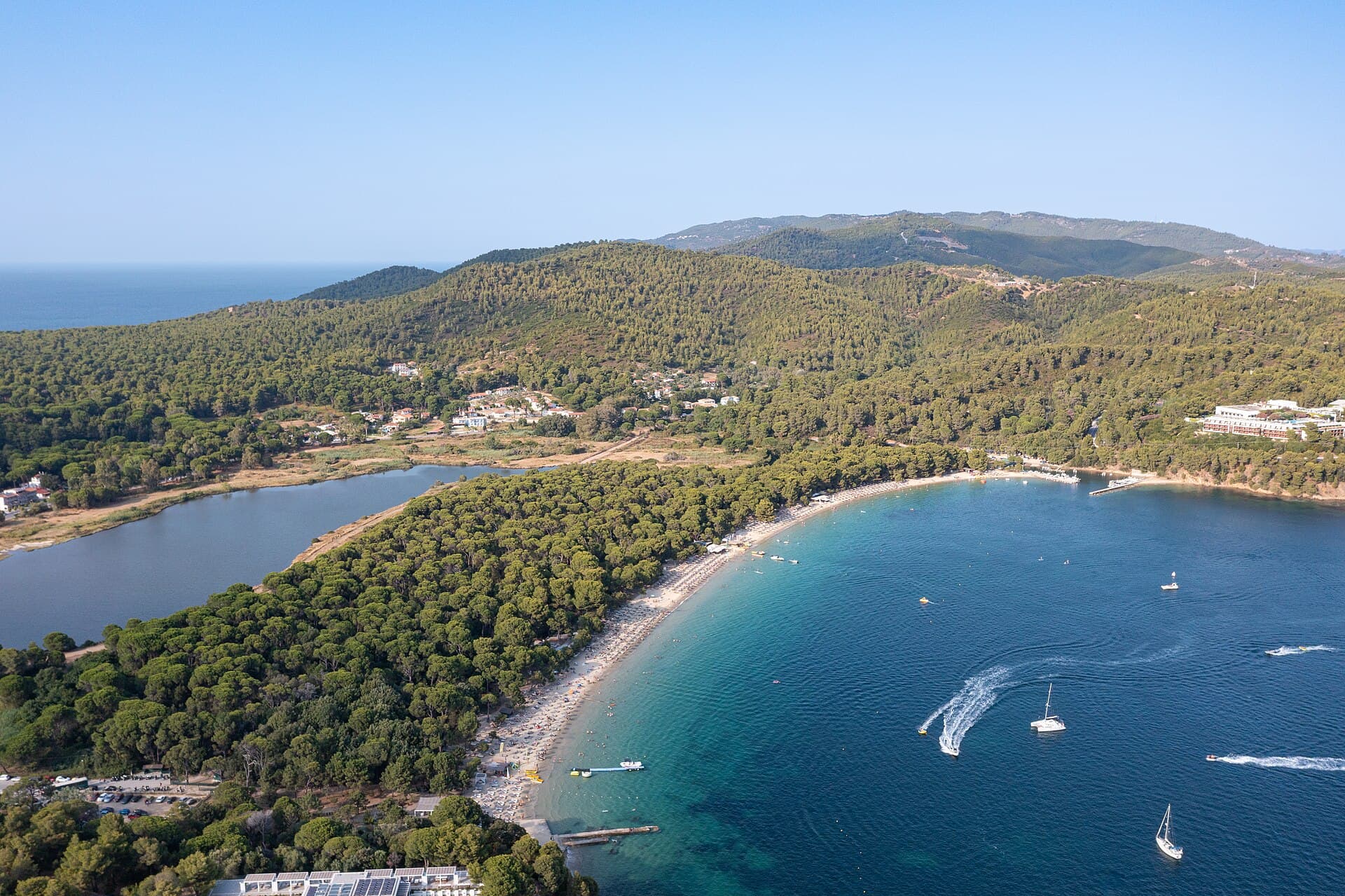
Behind the Blue Flag sand at Koukounaries is a nature reserve with a lake, Strofylia, and rare birds in the migration season. In front of it are pedalos, a ski and dive school, water rides and beach bars. It is one of the most popular beaches on Skiathos and about 30 minutes from Skiathos Town by a bus that leaves roughly every 15 minutes in summer. The advice is to avoid Sundays, when the day-trip boats arrive and free space gets hard to find. We measured 669 metres of sand.
Best: July (26.6 °C), then August and September →
No photo we can show yet
Peru · Piura
No. 1
Playa Vichayito
No rocks, gentler waves, and the way in is a green sign at kilometre 1155.
Vichayito is 1,583 metres of sand about 8 km from Máncora, 60 metres wide on average by our measurement. The way in is a little sign with green letters at kilometre 1155 of the old North Pan-American Highway, among the hostel signs. One guide says there are no rocks and the waves are gentler, which makes it good for swimming. Along the road are hostels, bungalows, budget hospedajes and cevicherías.
Best: March (27.7 °C), then February and April →
No photo we can show yet
Peru · Lima
No. 3
Playa Las Lagunas de Puerto Viejo
The biggest of the ten, an hour and a half from Lima, with birds next door.
By our measurement this is the largest of Peru's ten: 2,352 metres long, 126 metres wide on average, 296,625 square metres of sand. It is an hour and a half from Lima. Wetlands beside the beach host a variety of migratory birds. Some come for the surf; Lonely Planet sells it as the weekend getaway.
Best: February (21.7 °C), then March and January →
Peru · Chiclayo
No. 4
Playa de Pimentel
Fishermen still go out on reed boats, south of the pier.
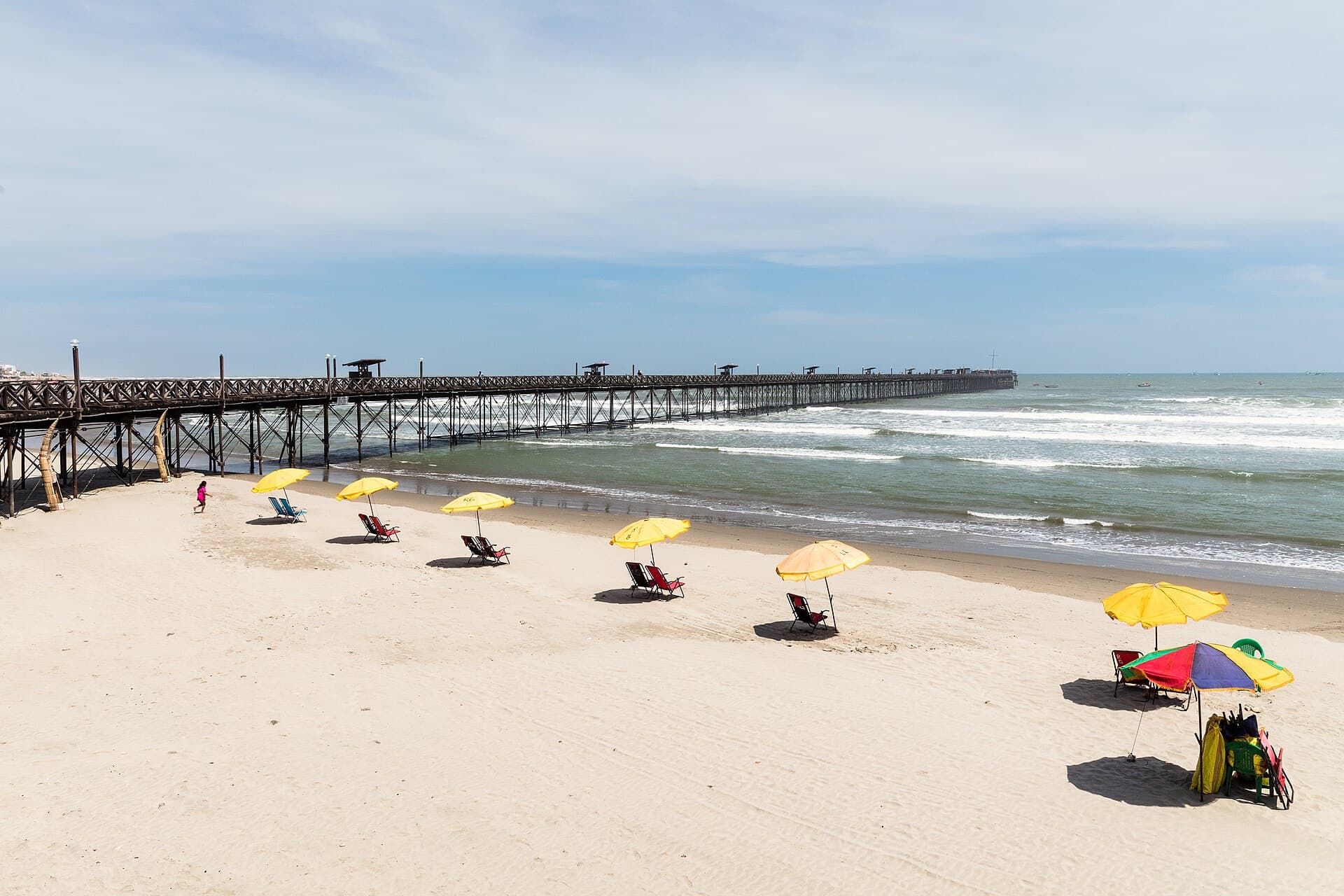
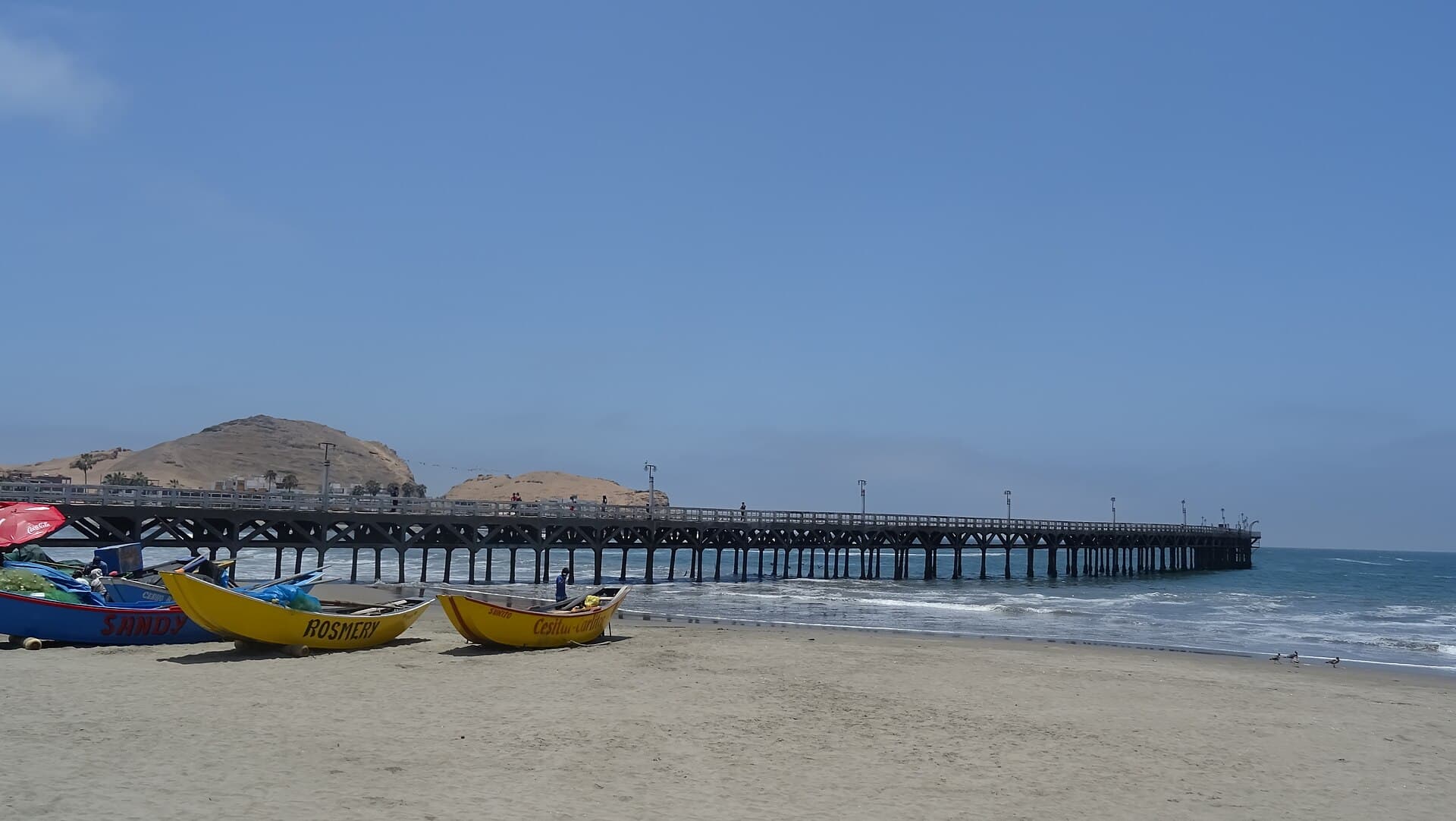
Pimentel is 11 km from Chiclayo: 2,571 metres of sand with a boardwalk, food stalls and a 695-metre pier refurbished for walking and line fishing. North of the pier is the modern part. South of it are the restaurants, the boats and the caballitos de totora: residents go out to fish riding or kneeling on reed boats.
Best: February (24.3 °C), then March and April →
Peru · Cañete
No. 5
Playa Cerro Azul
The Beach Boys sang about it in 1962. The wave moves every year.
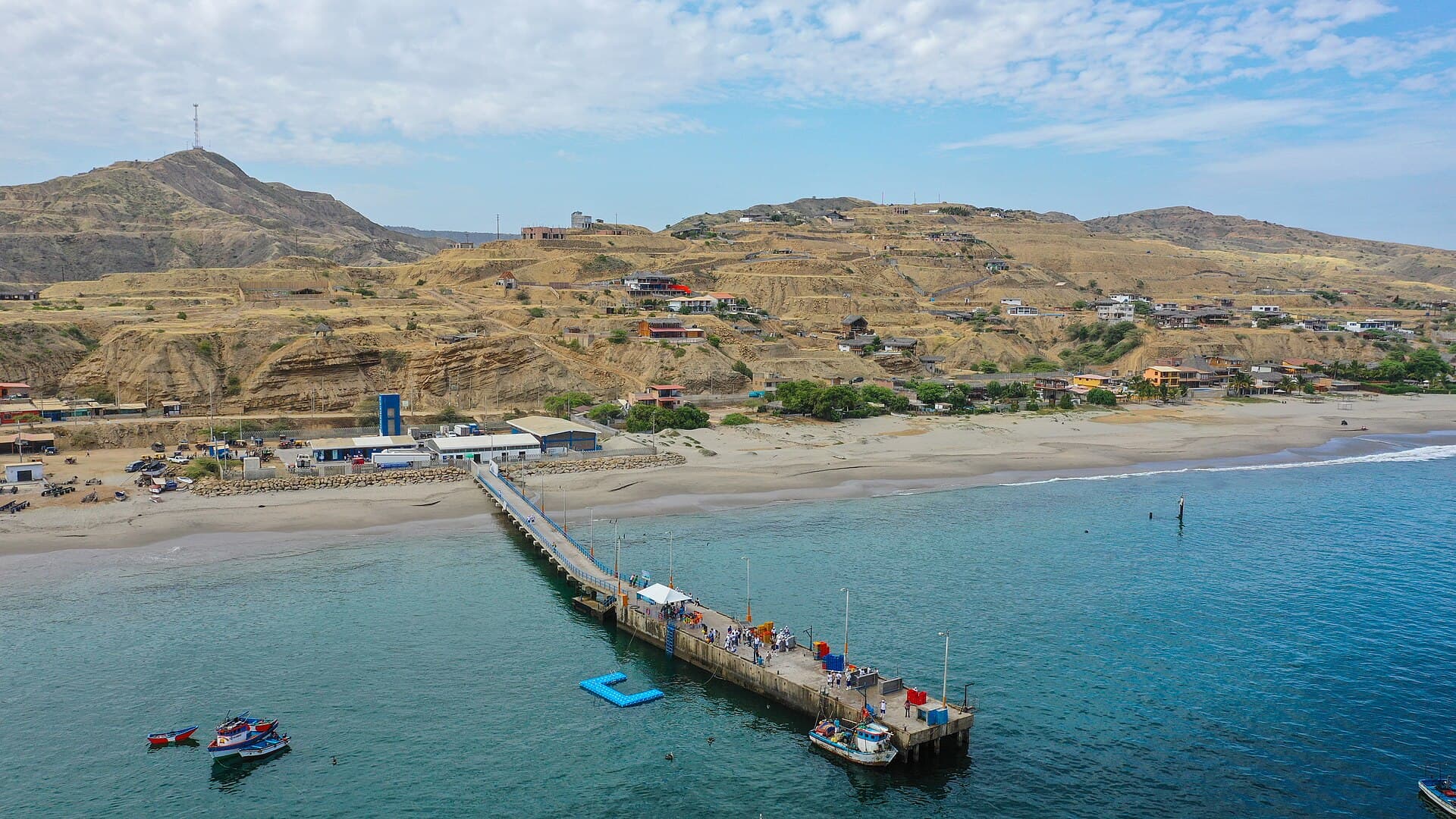
Cerro Azul is a fishing village and former port 131 km south of Lima. The Beach Boys mentioned it in their first major hit, Surfin' Safari, in 1962. South of the pier is Puerto Viejo, the old port, with the holiday homes and most of the surfing, on left breaks. North of the pier the beach is longer and sandier.
Best: February (22.4 °C), then March and January →
Peru · Piura
No. 7
Playa Los Órganos
Surf lesson, snorkel, hand-pole fishing or a whale. Pick one.
Los Órganos is a fishing village beach, 1,557 metres long by our measurement, and Lonely Planet's pick for variety: tranquil water for children, surf lessons, snorkelling, hand-pole fishing and whale-watching tours, all from the same village.
Best: March (27.7 °C), then February and April →
No photo we can show yet
Peru · Punta Hermosa, Lima
No. 8
Playa El Silencio
Called El Silencio. Lima comes anyway, in large numbers.
El Silencio is 45 km from downtown Lima, at kilometre 42 to 43 of the South Pan-American Highway, about 45 minutes to an hour by car. Entry is free and open around the clock. It has public restrooms with showers and changing rooms, and lifeguards in summer and at weekends. In Lonely Planet's words, it naturally attracts a large crowd of Limeño beach lovers.
Best: February (24.9 °C), then March and January →
Italy · Sicily
No. 2
San Vito Lo Capo
Seventy per cent of it is rented out. Get to the rest before nine.
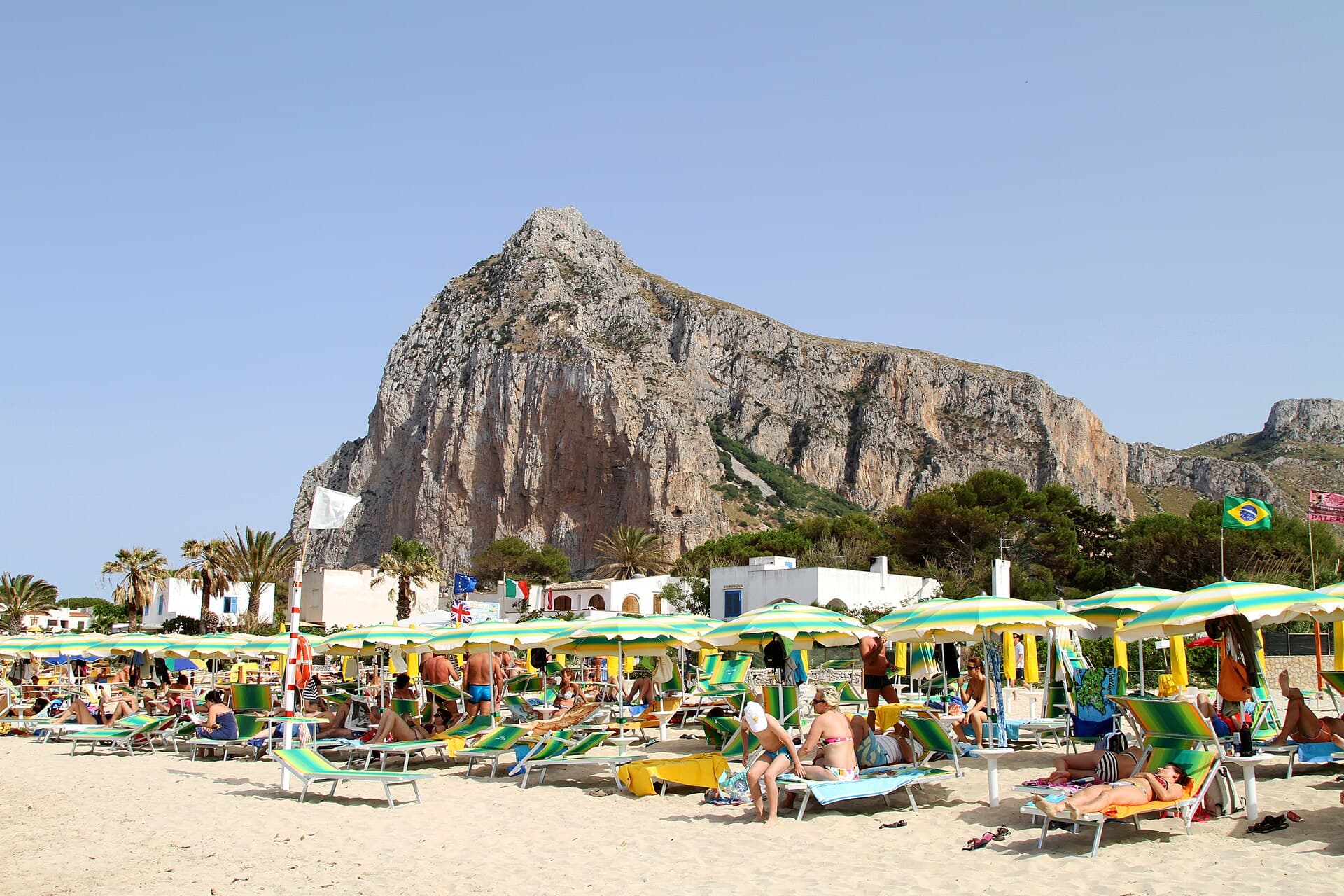
San Vito Lo Capo is a long Sicilian town beach, almost 3 km in one guide's count; the piece we measured is 1,466 metres. Roughly 70% of it is private lido, paid clubs with umbrellas, loungers, showers and a bar, and the other 30% is free, mostly at the southern end near Macari. A lido umbrella and two loungers ran about €28 to €30 a day in June 2026 and about €35 in August. The same guide's view of August: the water often runs murky from churned sand, prices peak, the free spots are gone by 9am, and half of Italy lands here.
Best: July (27.7 °C), then August and September →
Italy · Amalfi Coast
No. 4
Atrani Beach
Ten minutes through a tunnel from Amalfi, and the pebbles want shoes.
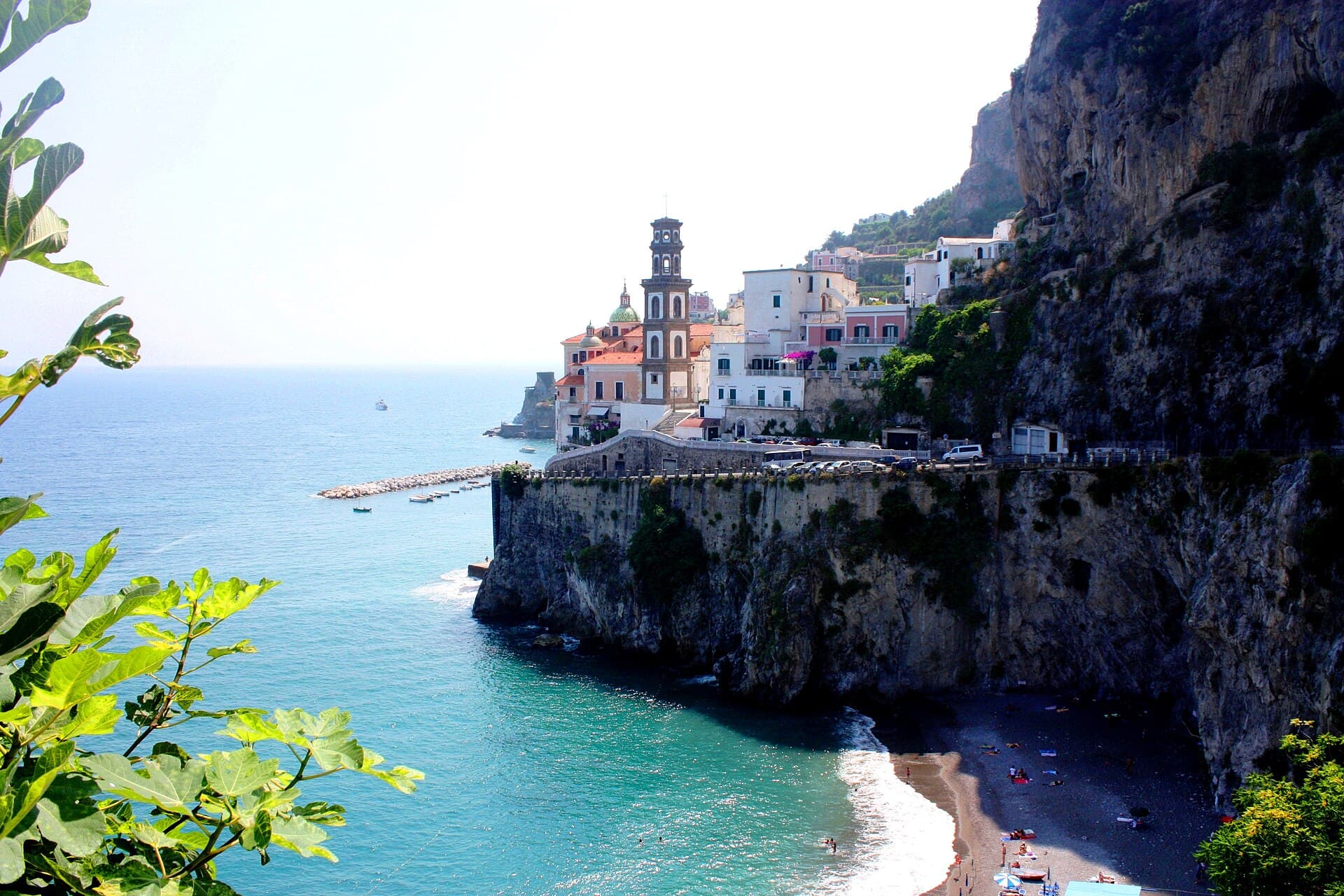
Atrani's beach sits directly below the village, separated from the houses only by a narrow road. From Amalfi a short pedestrian tunnel gets you there in under ten minutes. It is small, we measured 131 metres, and mostly pebbly, so water shoes help; there are free areas and lidos, and in 2022 two chairs and an umbrella cost €40 for the day. Outside the main summer season the beach clubs close. One guide calls it probably the only sand on the Amalfi coast. Another says pebbles. We print both.
Best: July (27.1 °C), then August and September →
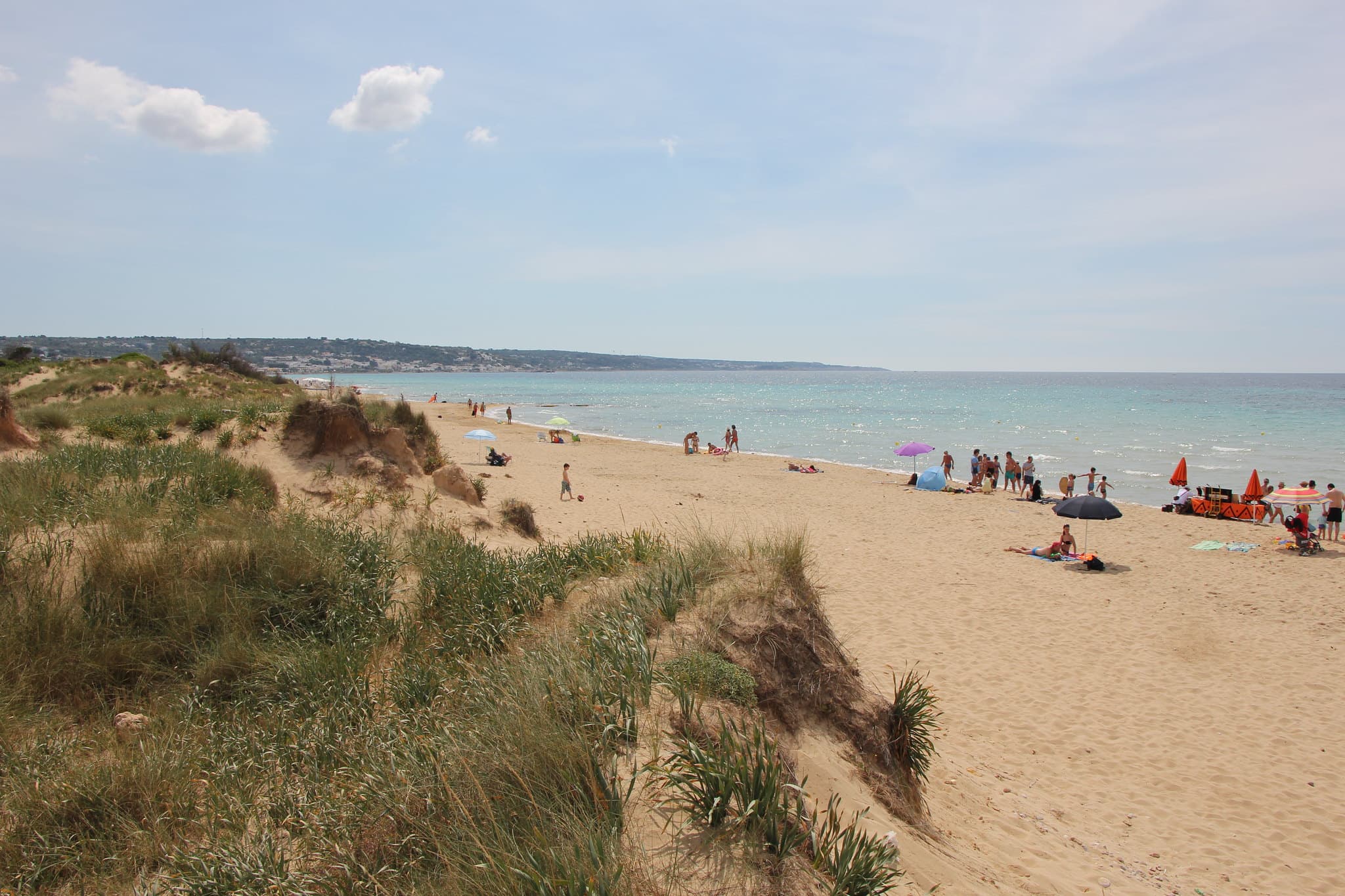
Italy · Salento, Puglia
No. 6
Pescoluse
Five kilometres of the finest sand in the Salento, and a nickname to live up to.
Pescoluse is five kilometres of white sand on the Ionian Sea, and its nickname is the Maldives of Salento, for water Lonely Planet calls clear and limpid. Italian Wikipedia says its sand is very fine and very light, the finest in the Salento. The polygon we measured is 2,484 metres of it. Along the beach are lifeguards, kiosks and restaurants, boat and raft rental, gelaterie and hotels.
Best: July (27.1 °C), then August and September →
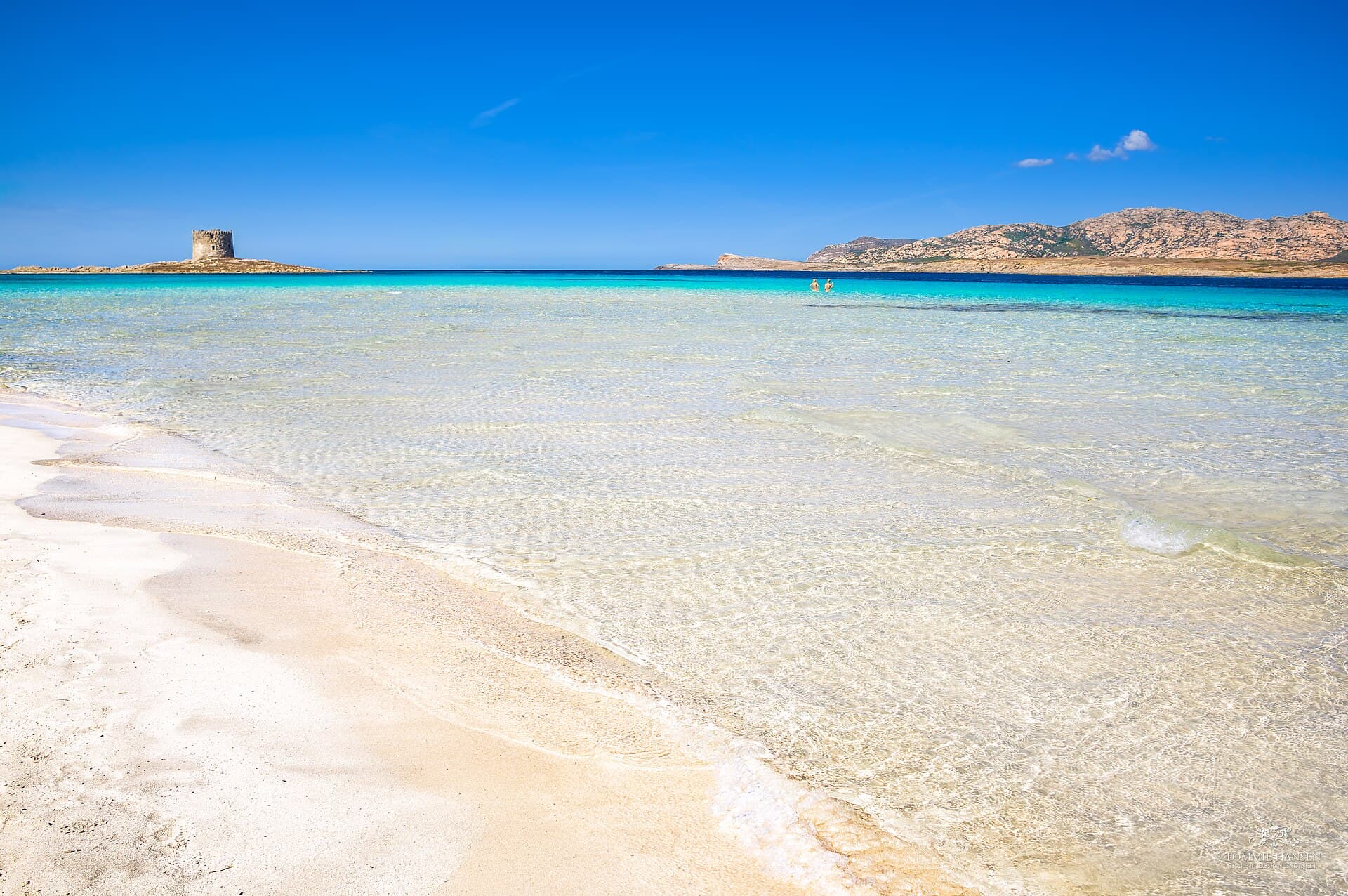
Italy · Stintino, Sardinia
No. 7
La Pelosa
1,500 reservations a day, a QR code, and a mat under your towel.
La Pelosa is Sardinia's booking-required beach. From May 15 to October 15, 2026, entry needs a reservation, with 1,500 places a day at €3.50 a person; 500 can be booked at any time and the rest open two days ahead, and you show the QR code at the entrance. You also need a beach mat under your towel, and fines run from €25 to €500. Paid parking is about €2 an hour, capped at €20 a day. It is about 50 minutes' drive from Alghero. We measured 417 metres of sand.
Best: July (26.1 °C), then August and September →
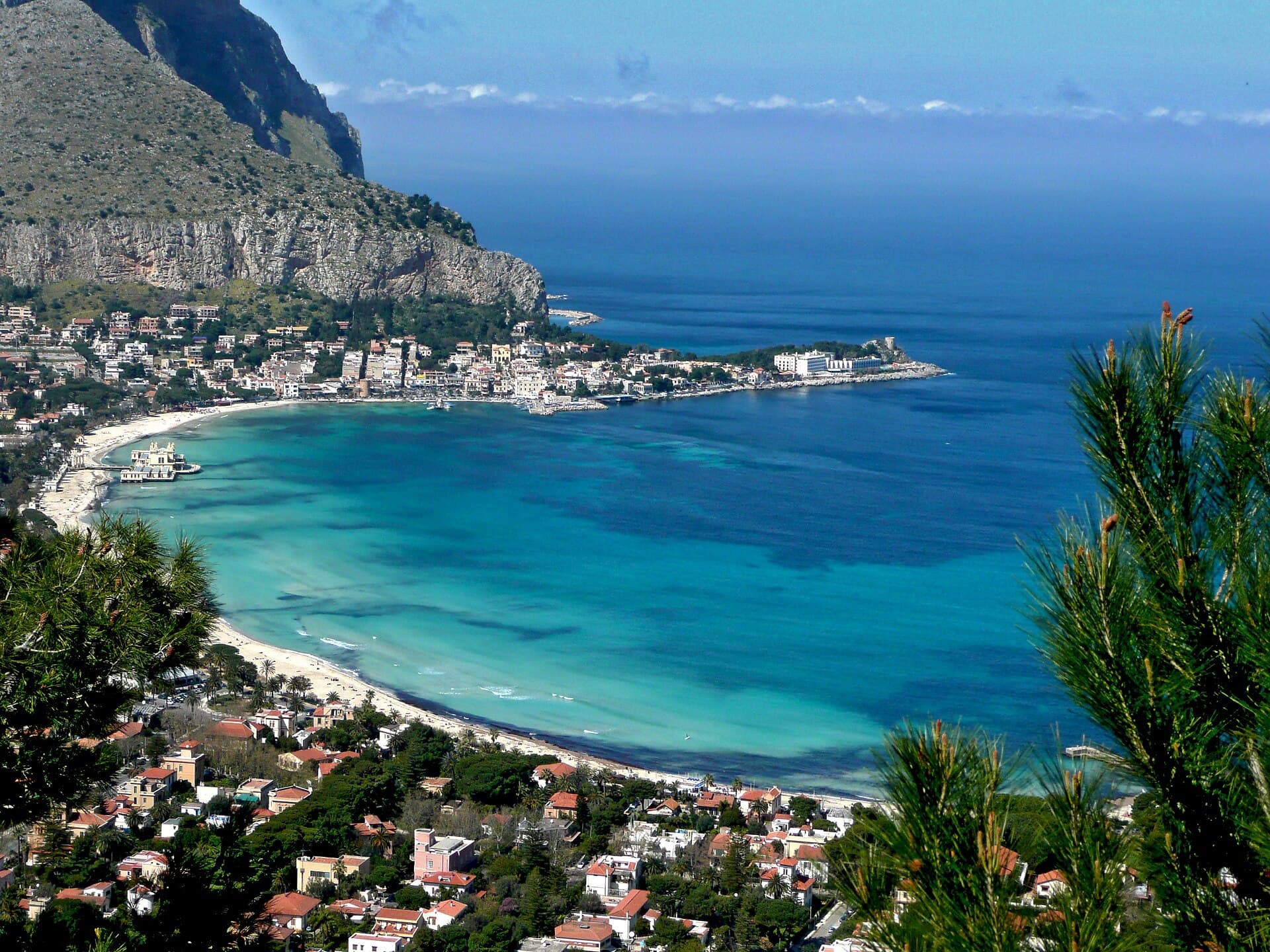
Italy · Palermo, Sicily
No. 8
Mondello
Palermo's beach, in a bay between two mountains.
Mondello is a semicircular bay about 1.5 km long between two promontories, Mount Pellegrino and Mount Gallo, 12 km from Palermo and separated from the city by the Parco della Favorita. We measured 1,421 metres of sand. The town around it has all the services: shops, restaurants, cafes and beach bars. Of the ten, its sea was the second warmest in 2025.
Best: July (28.0 °C), then August and September →
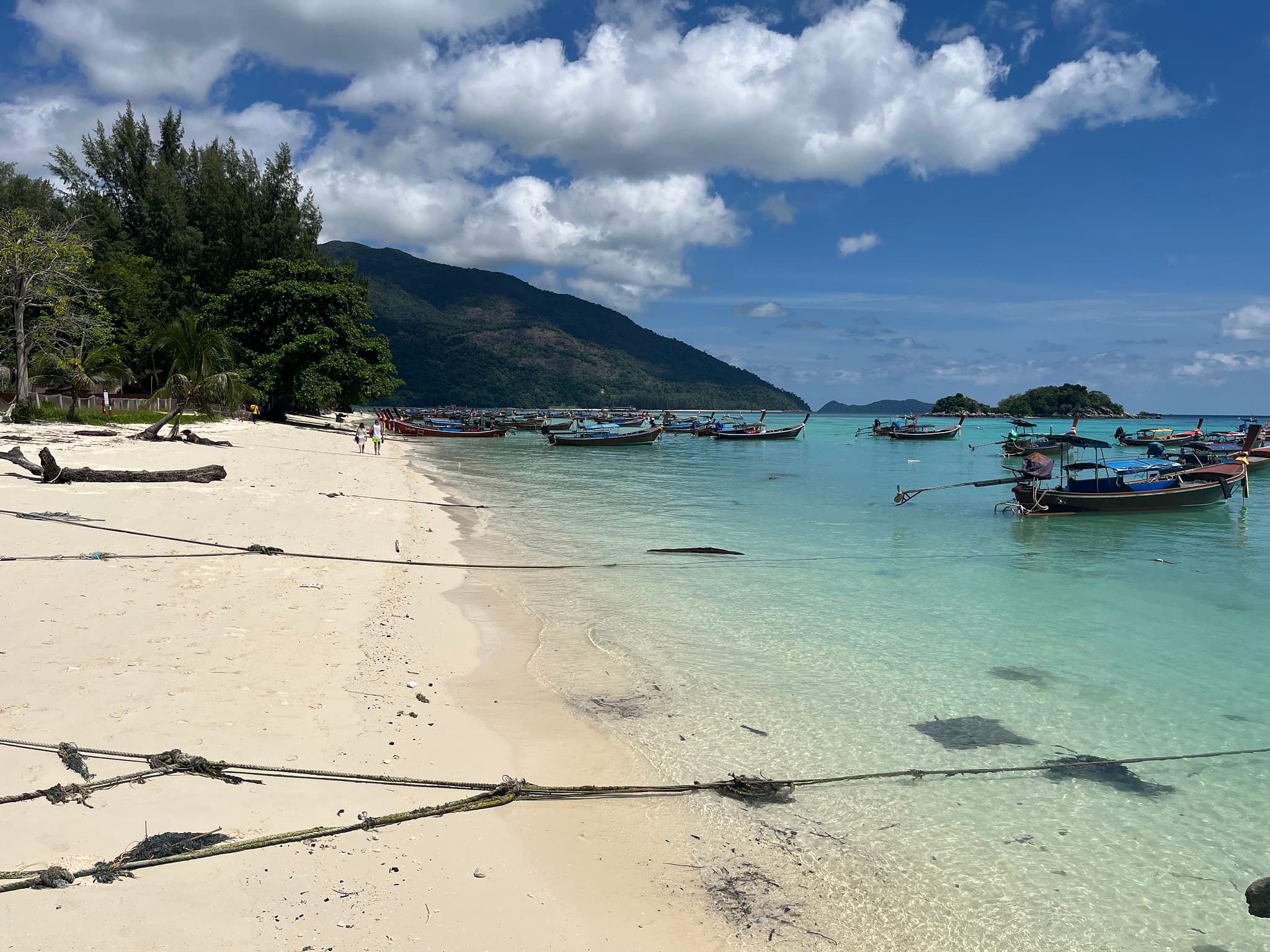
Thailand · Ko Lipe
No. 3
Sunrise Beach (Ko Lipe)
A national park fee, a 1.5-hour speedboat, and room for everyone.
Sunrise Beach is the long one on Ko Lipe, 1,492 metres by our measurement, and big enough to find your own patch even in high season. It is inside Tarutao National Park, so foreign visitors pay ฿200 an adult and ฿100 a child, and rangers check the ticket on snorkel trips. Speedboats run from Pak Bara pier in about an hour and a half for about ฿700. Walking Street links it with Pattaya Beach on the south coast, five minutes from the restaurants and dive shops. The island is generally only reachable from mid-October to mid-May.
Best: August (31.1 °C), then July and May →
Thailand · Ko Samui
No. 9
Lamai Beach
Faces east. Come for the sunrise, not the snorkelling.
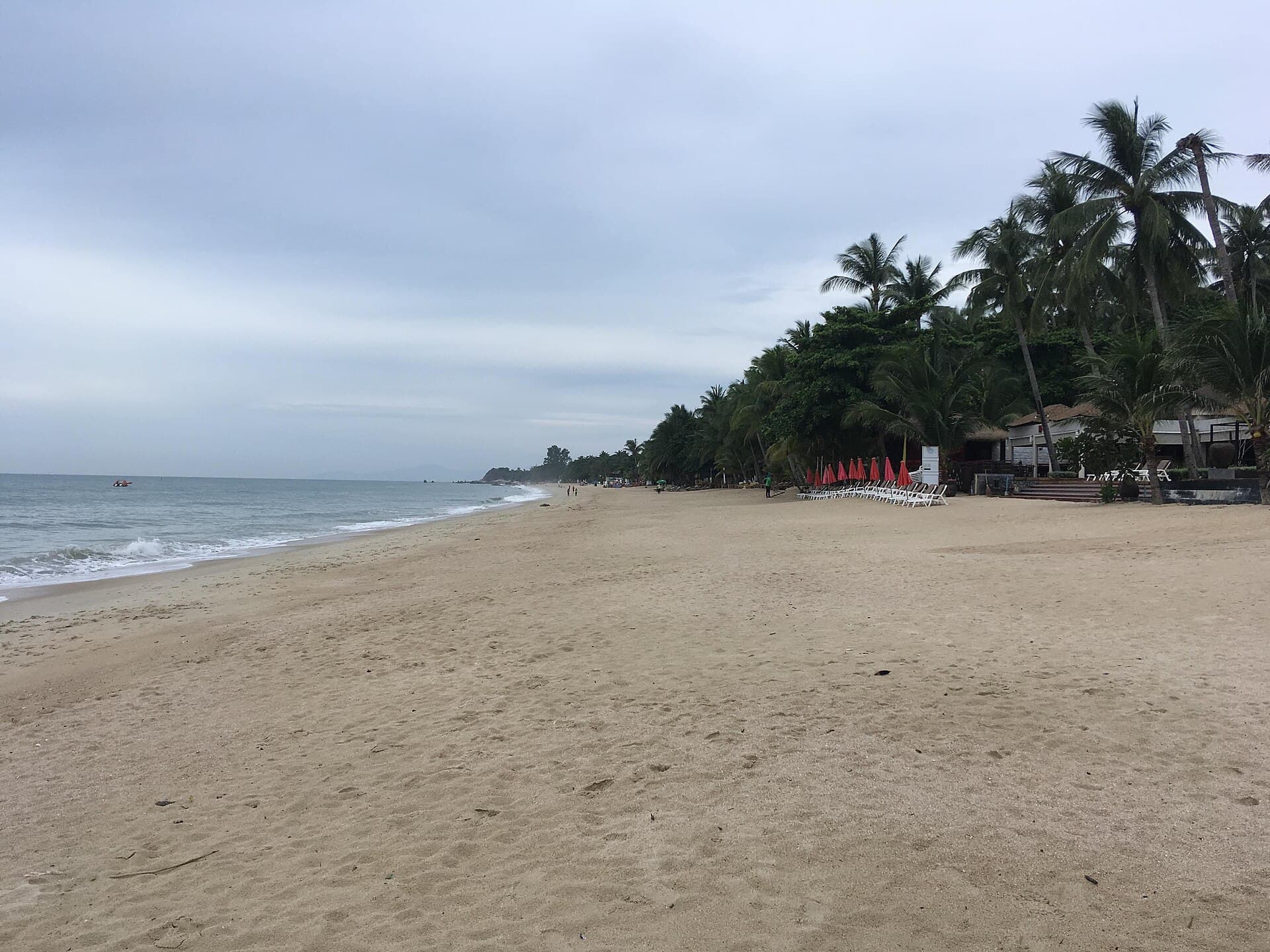
Lamai is on Ko Samui's southeast coast, about 6 km south of Chaweng and 25 to 30 minutes from the airport, and it faces east, so come for the sunrise. We measured 3,356 metres of it. There is no entrance fee and no set hours, and parking at the public entry point is free if you find a space. Expect stones and broken shells in patches and waves a touch livelier than Chaweng's. The snorkelling is poor. October to December bring the heaviest rain and the roughest sea; December to March is the crush.
Best: May (31.4 °C), then June and April →
Spain · San Sebastián
No. 2
La Concha
A city beach that keeps a storm up its sleeve, and arrives in 20 minutes.
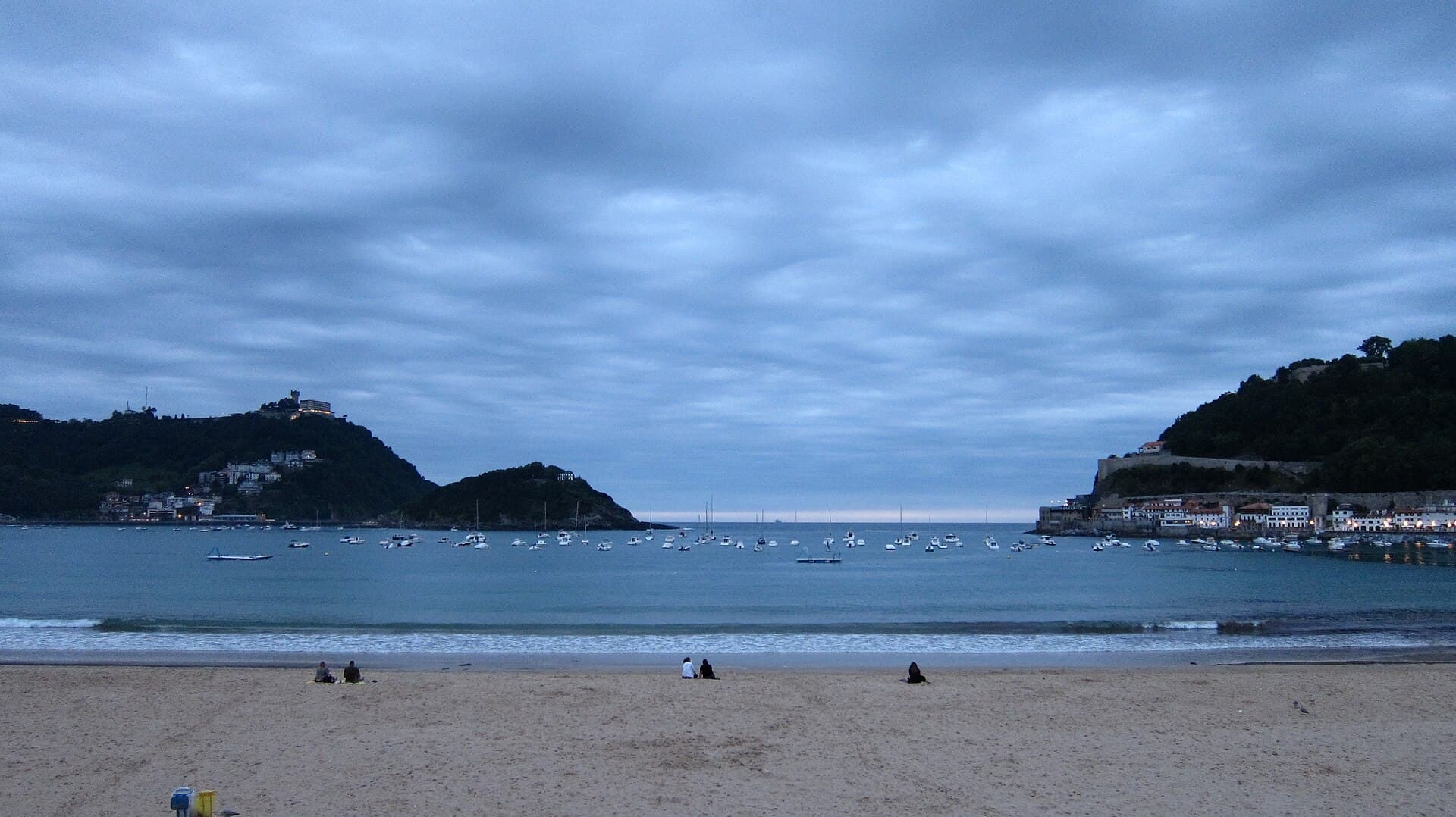
La Concha is San Sebastián's city beach, 1,110 metres of it by our measurement, and for all that it feels surprisingly relaxed, one guide says. In season, lifeguards patrol and swimming zones are flagged; there are free toilets, showers and changing rooms, and umbrellas, tents and loungers rent for €15 a day. Two things to know: at high tide the sea takes back much of the sand, along with anything left too close, and a galerna, a sudden coastal storm, can form offshore and reach the beach in under 20 minutes.
Best: July and August (23.2 °C each), then September →
Spain · Las Palmas, Gran Canaria
No. 9
Playa de Las Canteras
A city beach with its own reef wall 200 metres out.
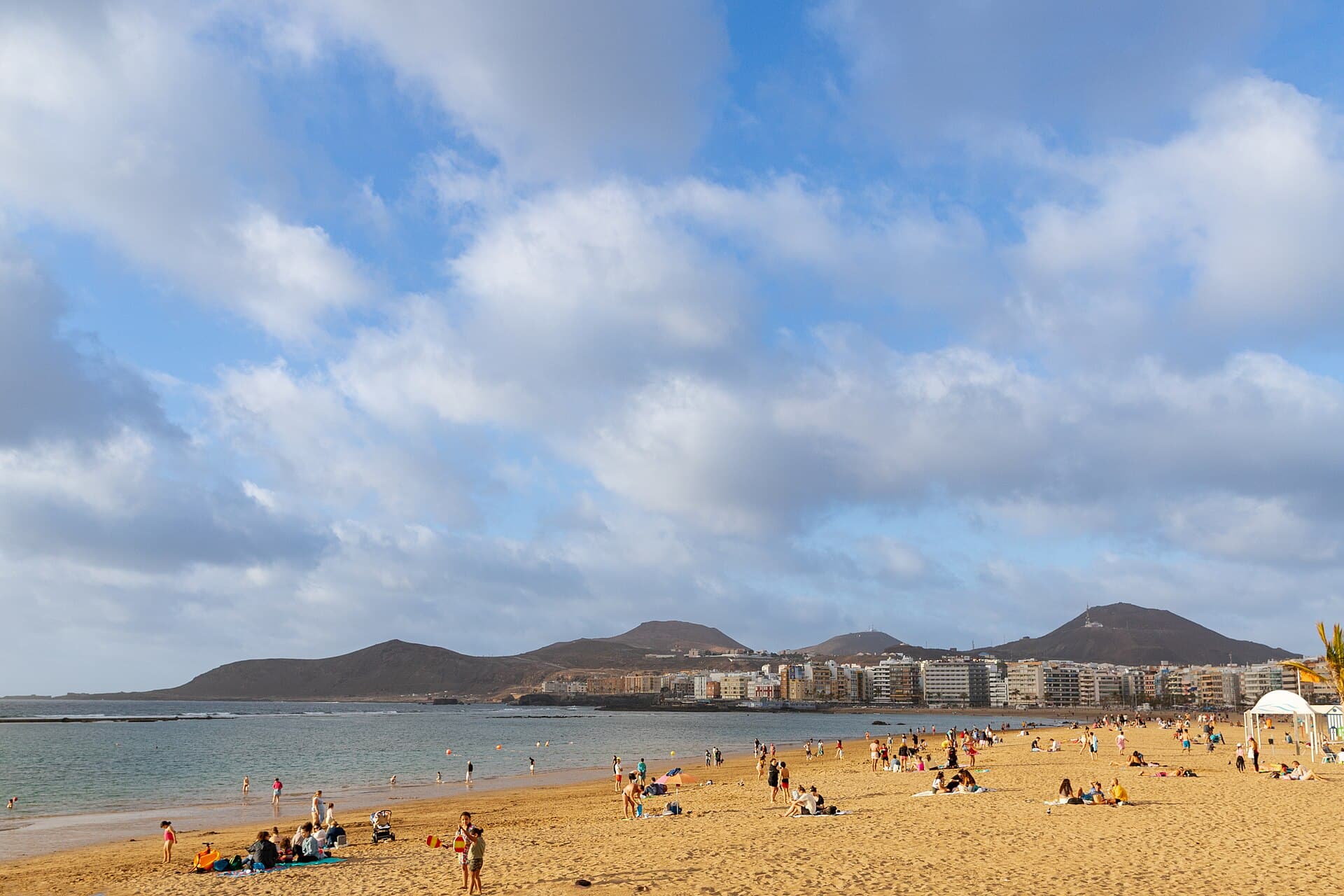
Las Canteras is Las Palmas' city beach, 2,651 metres by our measurement, with a pedestrian promenade, the Paseo de Las Canteras, along its length and a Blue Flag. About 200 metres offshore, parallel to the shore, runs a natural reef the locals call La Barra, which calms the water behind it. The southern arc is not protected by the reef and takes the waves, and the surfers go there.
Best: August (23.7 °C), then September and October →
Spain · Santa Cruz de Tenerife
No. 10
Playa de Las Teresitas
Golden sand, shipped in from the Sahara.
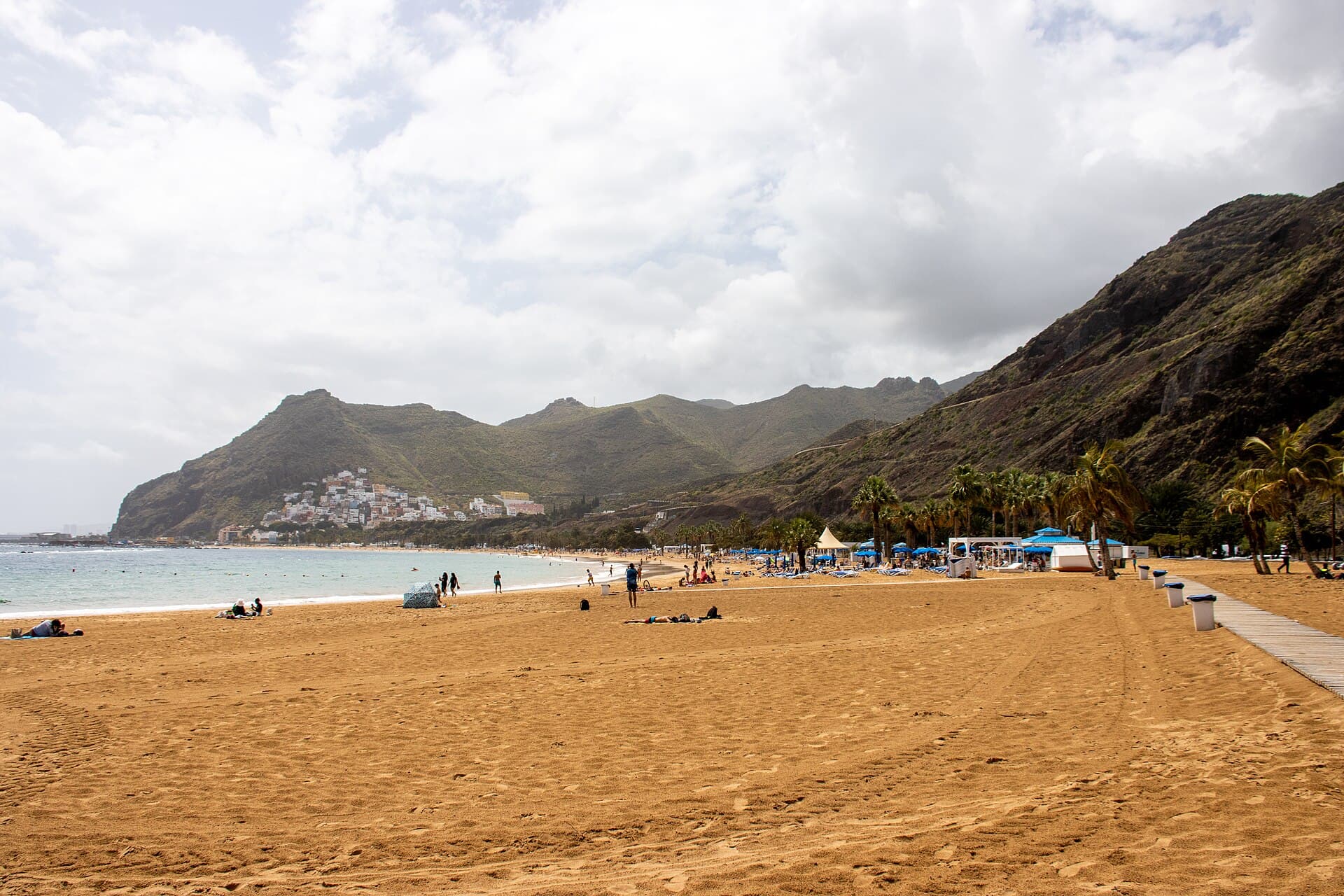
Las Teresitas is close to Santa Cruz de Tenerife, and its golden sand was shipped in from the Sahara. It has parking for over 100 cars, a bus service, a paddle area, bars, restaurants and facilities, and Lonely Planet calls it popular for its chilled atmosphere and chiringuitos. We measured 1,141 metres of sand, 128 wide on average.
Best: August (24.3 °C), then September and October →
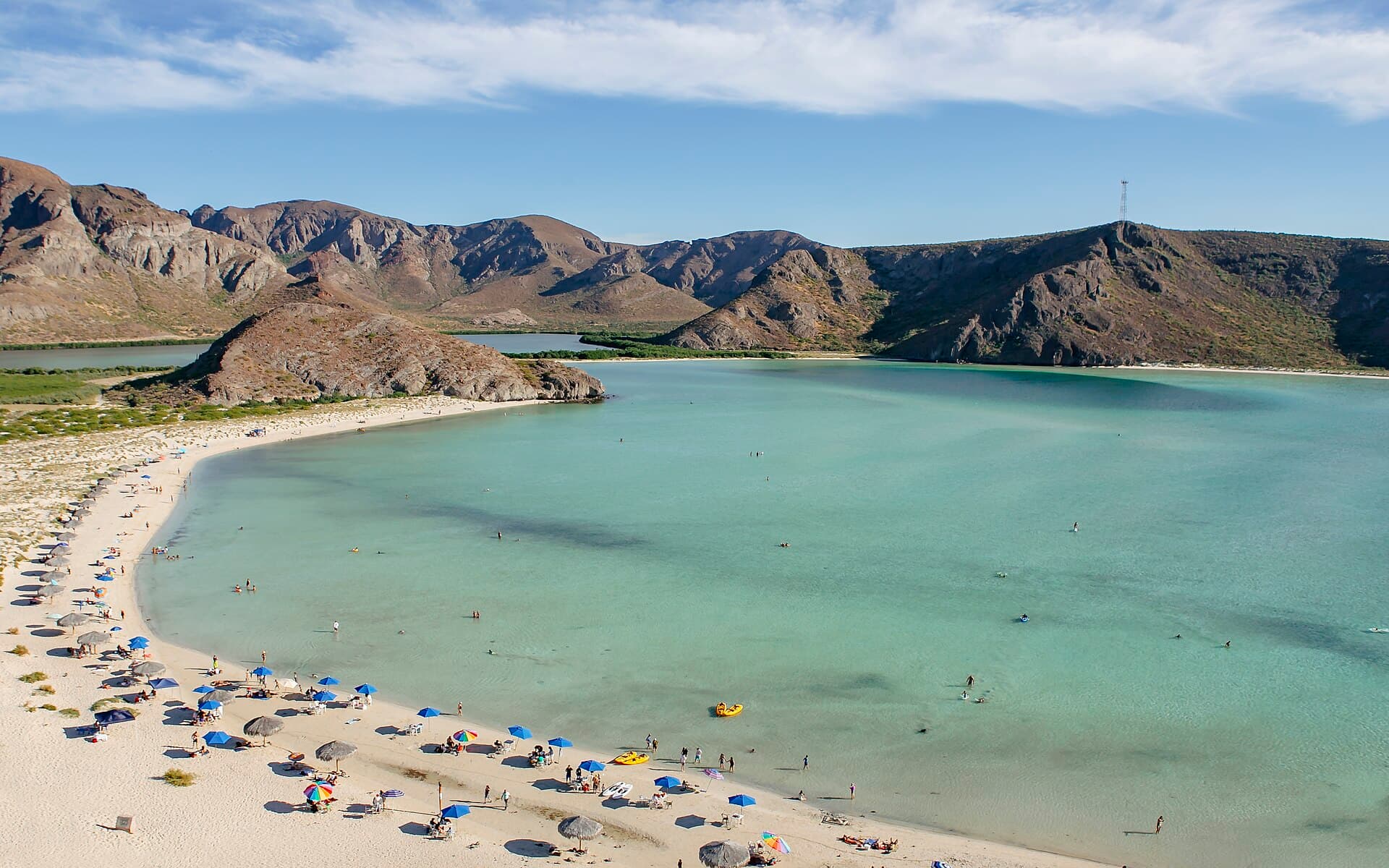
Mexico · La Paz, Baja California Sur
No. 1
Playa Balandra
A protected bay with two entry slots a day, 450 people each.
Balandra is the beach the most lists agree on in Mexico: six of the seven we read. It is a protected natural area about 25 minutes' drive north of downtown La Paz, not in Cabo San Lucas, whatever the internet says. Entry is controlled by CONANP: every adult needs a paid digital bracelet, 125 pesos for one slot, and a reservation for one of two daily slots, 8am to noon or 1pm to 5pm, with 450 people per slot. In high season, December to April and holidays, slots can sell out. Inside there are no shops, no restaurants and no gear to rent. We measured 392 metres of sand.
Best: September (30.0 °C), then August and October →
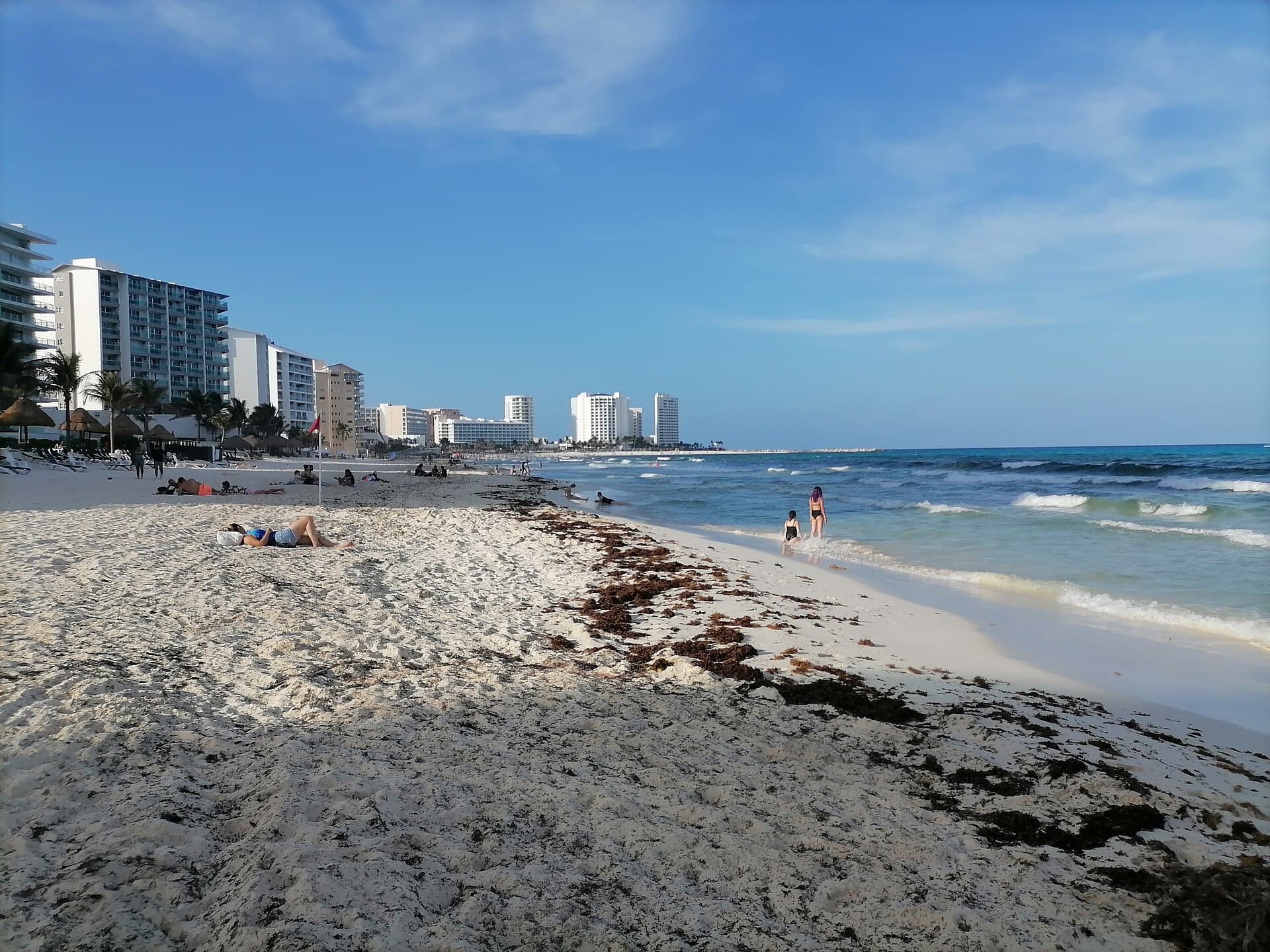
Mexico · Cancún
No. 4
Playa Delfines
Free, open around the clock, and the waves are the price.
Playa Delfines, also called El Mirador, is Cancún's free public beach: no entry fee, free parking for over 50 cars, open 24 hours, with lifeguards from 9am to 5pm, free toilets and showers. Get there by the R1 or R2 bus, a taxi or your own car. The main risk is the waves, moderate to strong, and the rip currents can be strong too, so its own guide says to swim with caution, follow the flags, and not bring small children or weak swimmers. Weekdays are much quieter than weekends. OpenStreetMap maps it as one long shape with Playa Marlín, Ballenas and Gaviota Azul, 11.6 km of Cancún's hotel-zone beach, so that is the length we measured.
Best: October (29.4 °C), then September and August →
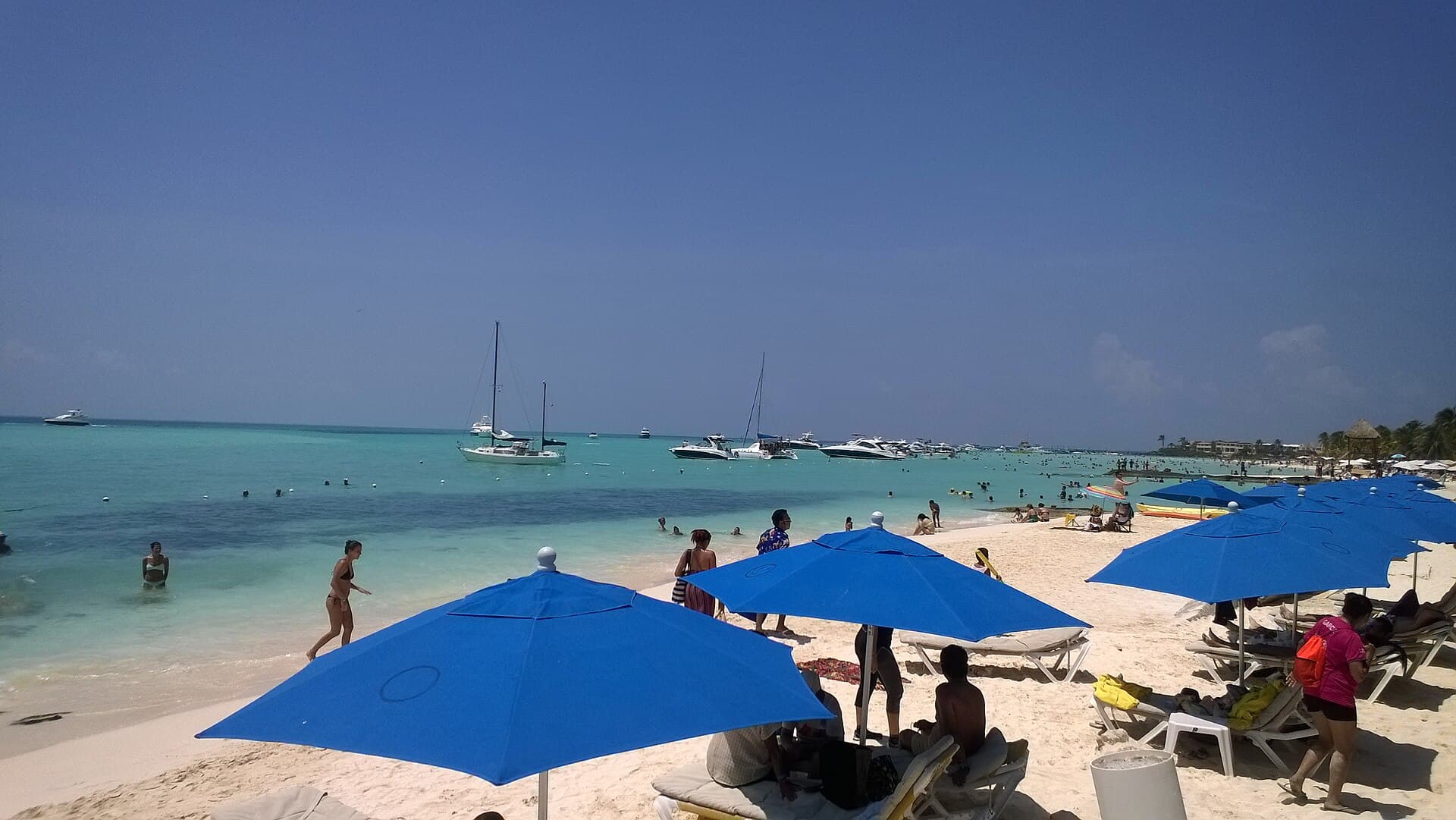
Mexico · Isla Mujeres
No. 5
Playa Norte
Waist-deep for a hundred metres, and the day-trippers leave at five.
Playa Norte is the beach at the north end of Isla Mujeres, twenty minutes by ferry from Puerto Juárez with boats about every half hour. Town, ferry terminal and beach are all within a fifteen-minute walk. At the north end the water stays waist-deep for a hundred metres and has almost no waves. There is no shade after midday except the beach clubs' parasols. Day-trippers arrive around eleven and leave by five; outside those hours the island belongs to the people staying on it. Take the last ferry seriously.
Best: August (30.1 °C), then September and October →
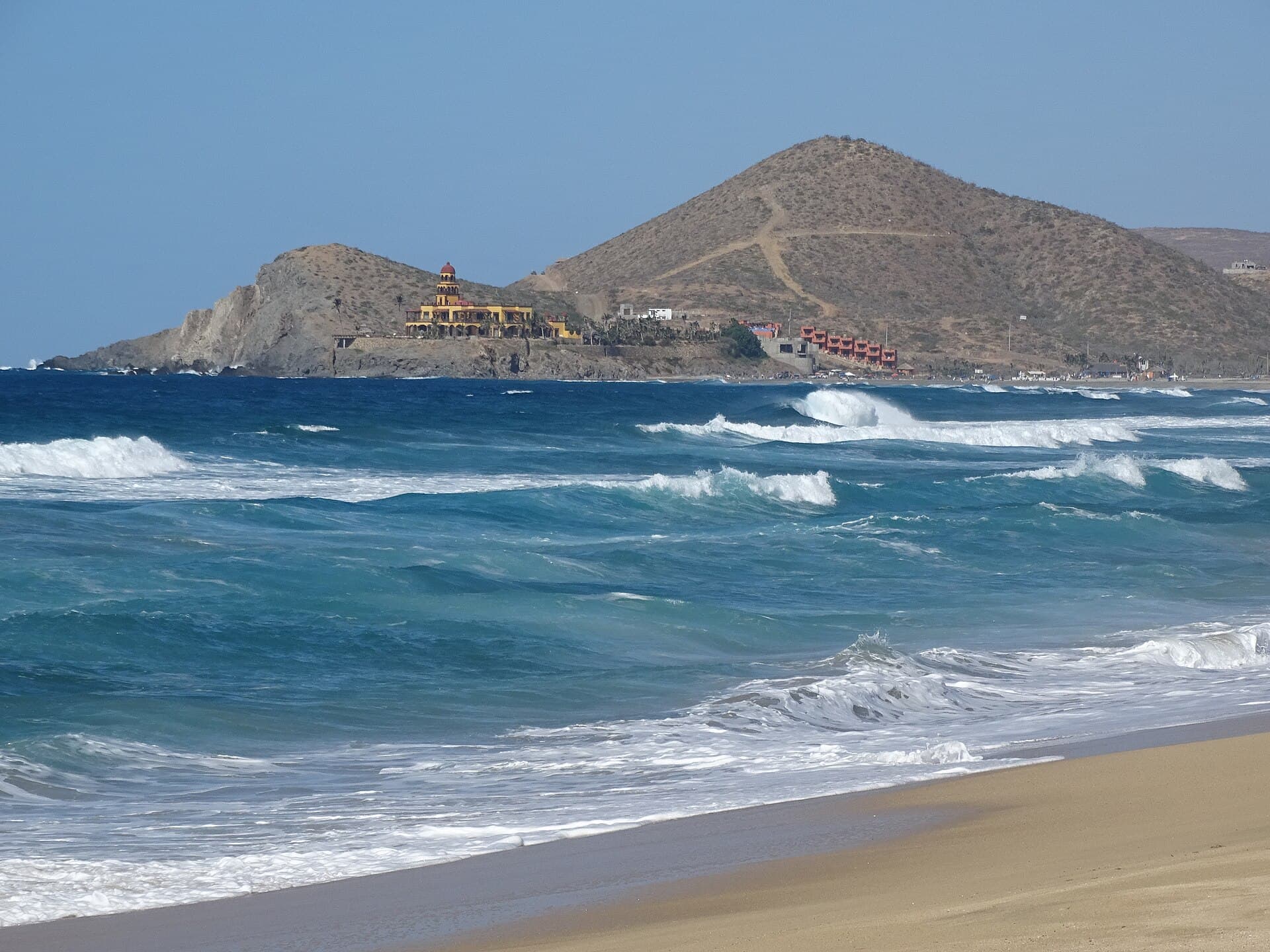
Mexico · El Pescadero, Baja California Sur
No. 9
Playa Los Cerritos
One of the few Pacific beaches at the tip of Baja where you can swim.
Cerritos is about 40 to 45 km northwest of Cabo San Lucas on Highway 19, around 45 minutes by car, and one of the few swimmable beaches on the Pacific side of the tip of Baja. The rips and waves are not as strong as on other beaches nearby, and one part is usually calm enough to swim. It is one of the most developed beaches in the area, with a bar and restaurant, and the vendors are not pushy. Bring pesos: ATMs are scarce in El Pescadero. The polygon we measured, which also carries the name San Pedrito, is 4,062 metres long.
Best: September (29.6 °C), then August and October →
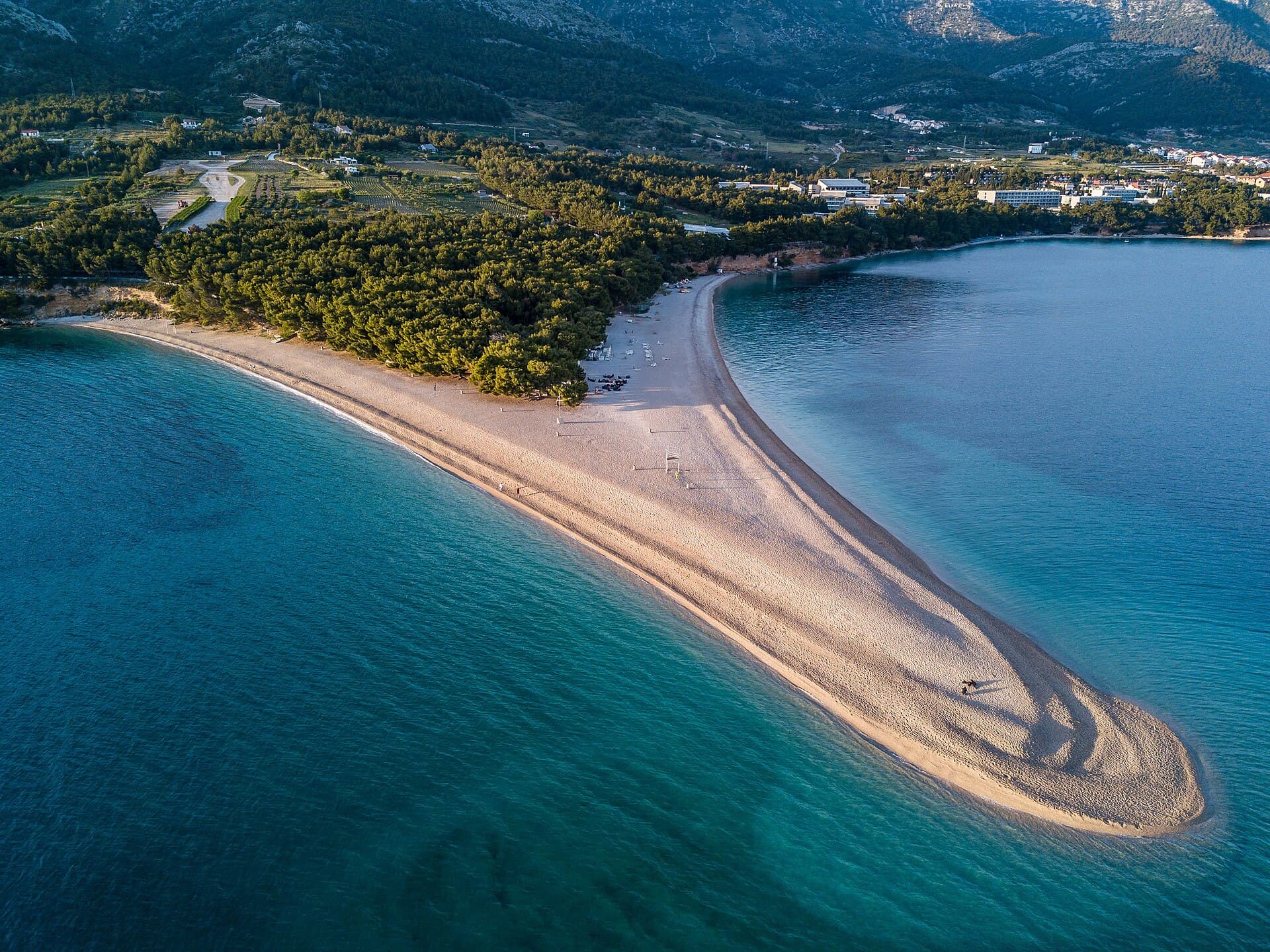
Croatia · Bol, Brač
No. 1
Zlatni Rat
A beach that changes shape in a storm, and moves its tip in hours.
Zlatni Rat, the Golden Horn, is the beach on all four of the Croatia lists we read: a spit of fine, soft pebbles reaching out from Bol on Brač. In a storm with strong winds and waves, its tip can shift from one side to the other in a matter of hours. A pine-scented promenade leads there from Bol, 15 minutes by the official page and 30 by Lonely Planet, and a tourist train runs every half hour. There are boats, kayaks and boards to rent, loungers, and two restaurants beside it. The current at the tip can be mildly hazardous for swimmers who head far south, and the western edge is traditionally clothing-optional. We measured 423 metres of it.
Best: July and August (25.7 °C each), then September →
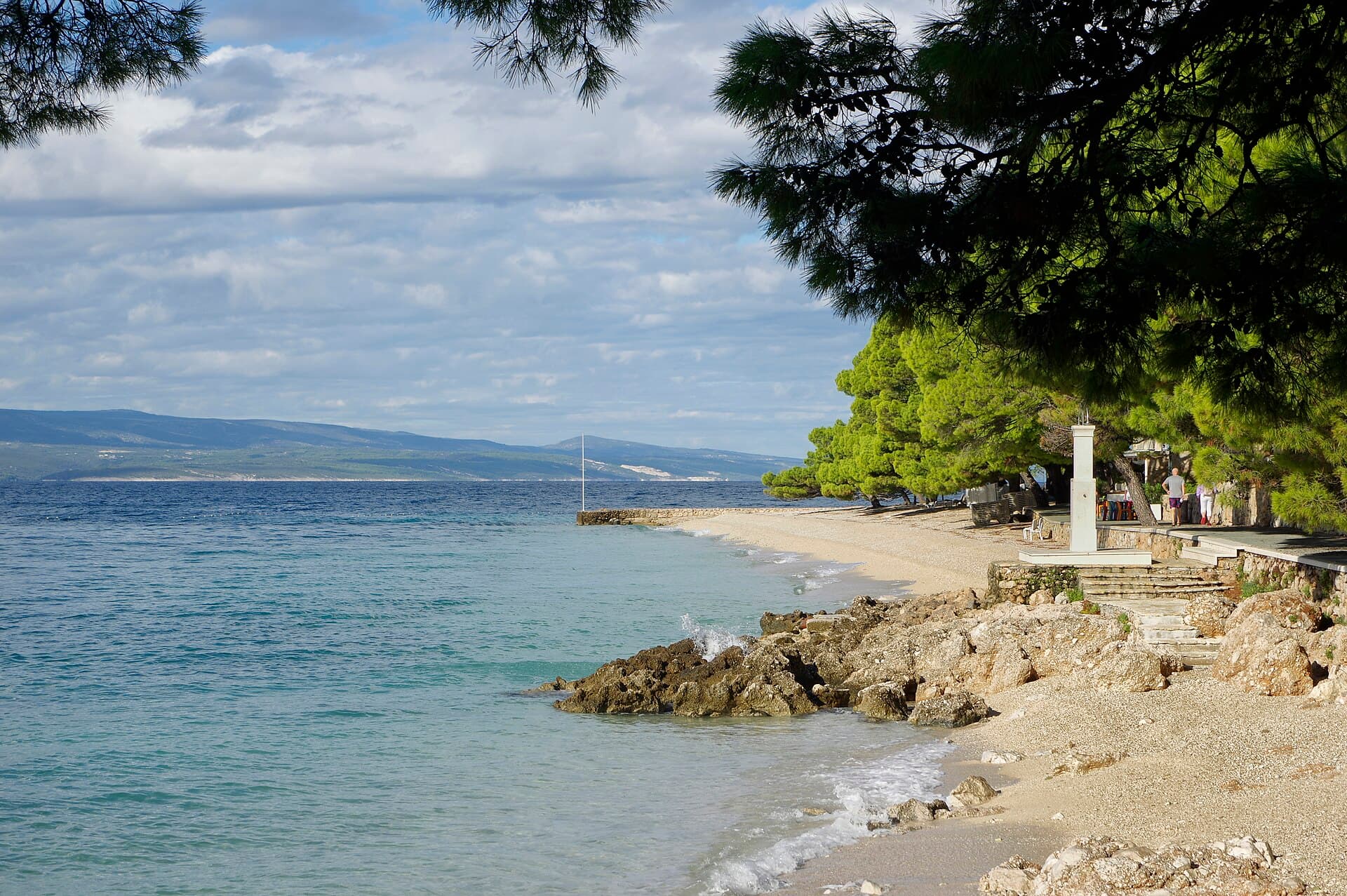
Croatia · Brela
No. 2
Punta Rata
All four lists agree, and so do the families who arrive by nine.
Punta Rata is just over a kilometre north of Brela, about an hour's drive from Split, and all four lists we read name it. This part of Brela has been protected since 1964. There is a car park beside it, with a daily fee, and showers, toilets, loungers, lifeguards and several bars and restaurants. It is a family beach and gets packed in July and August. Dogs are allowed, but sometimes restricted when it is busy. We measured 306 metres; Lonely Planet says 300.
Best: July (26.2 °C), then August and September →
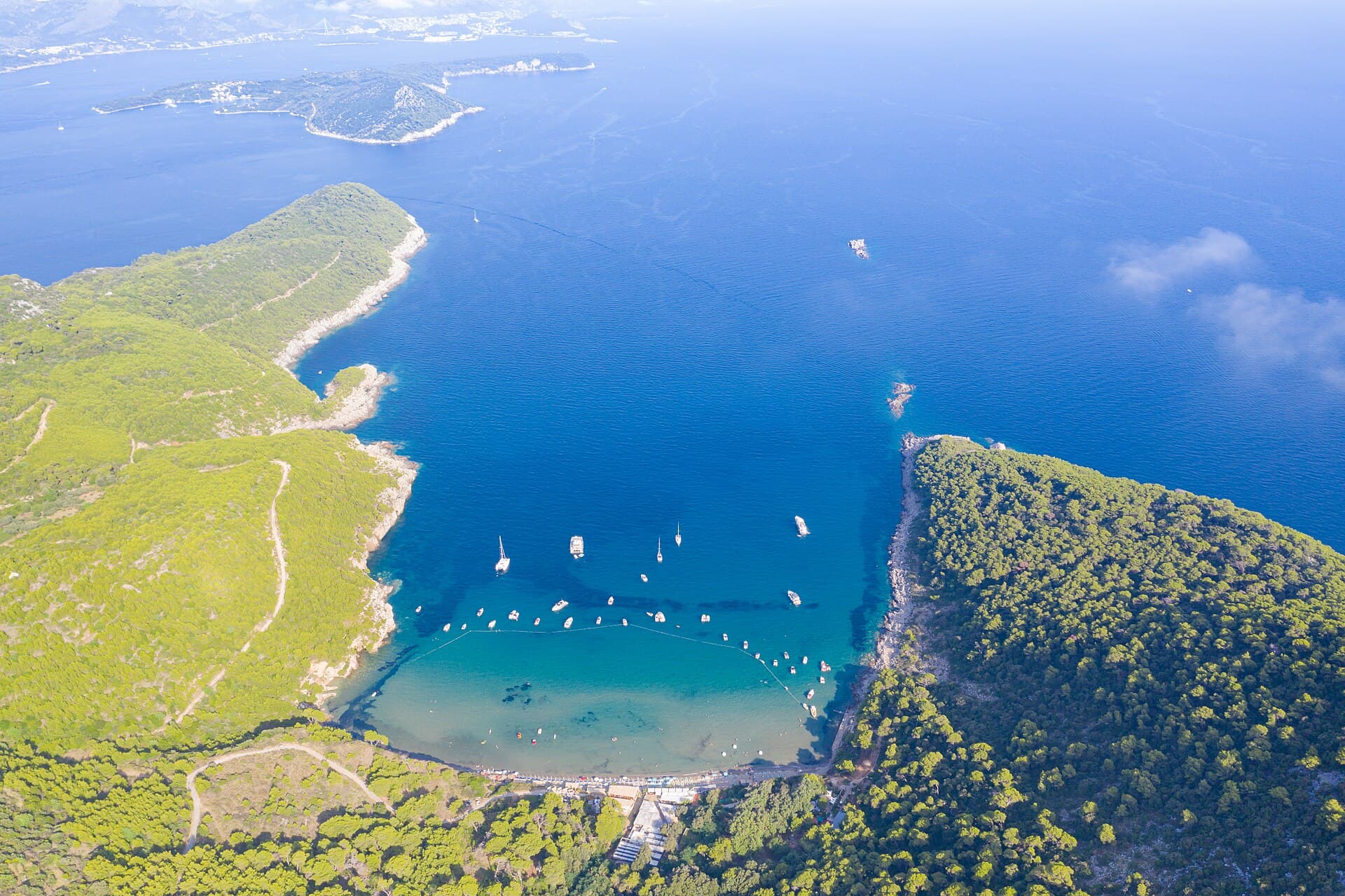
Croatia · Lopud
No. 3
Šunj
A car-free island, a golf cart, and sand for small children.
Šunj is on Lopud, a car-free island near Dubrovnik. The ferry from Gruž port takes just under an hour, stopping at Šipan, for about €10 return. From the harbour it is a 25-minute walk, or a golf-cart taxi for €3. It is a favourite with families with small children, with loungers to hire, toilets, showers and a small restaurant; the eastern end is kept for naturists. We measured 259 metres of sand; sources say anything from 200 to 800.
Best: August (25.8 °C), then July and September →
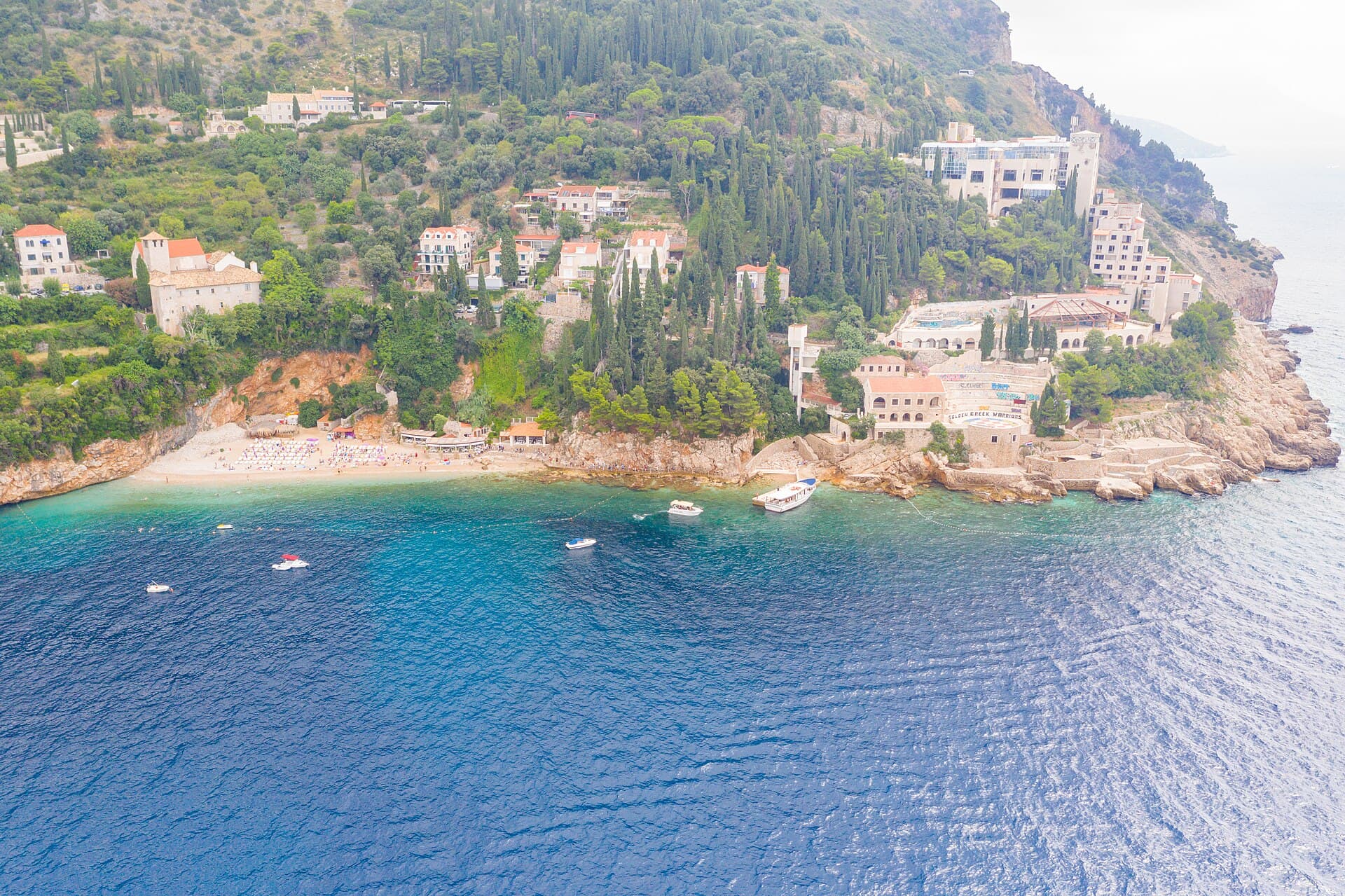
Croatia · Dubrovnik
No. 4
Sveti Jakov
160 steps down from a church, and Dubrovnik's crowds stay up there.
Sveti Jakov is the Dubrovnik beach for people avoiding the Dubrovnik beach. It is a 20 to 30 minute walk from the Old Town, or bus no. 8 from Pile Gate to Sveti Jakov church, then 160 stone steps down behind it, and back up. There is a restaurant, a bar, free showers, and sunbeds and umbrellas at €15 each for the day. Parking by the church is limited. We measured 97 metres of it.
Best: August (25.9 °C), then July and September →
Philippines · Boracay
No. 1
White Beach
Four kilometres of powder, and the whole island turns up for sunset.
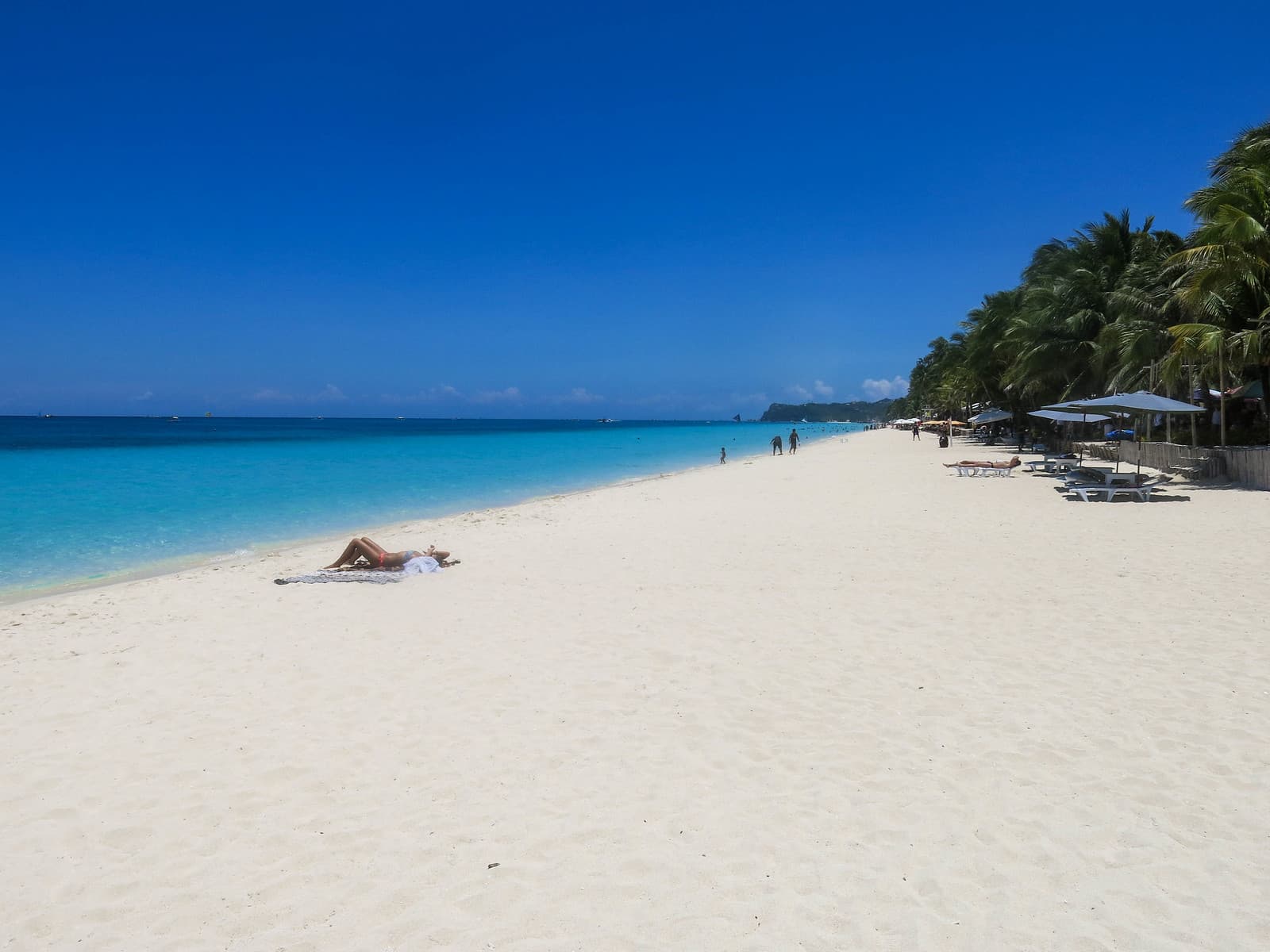
Boracay's White Beach is a four-kilometre ribbon of powder-fine sand on the island's western shore, split into three numbered Stations. A path runs its full length behind a line of coconut palms, and D'Mall, just inland, has restaurants, dive shops, pharmacies, ATMs and a small grocery. The sand is free: no gate, no ticket. Foreign visitors pay an environmental fee of around PHP 300 once per stay, plus a terminal fee of roughly PHP 150 each way at the Caticlan jetty. For part of the year a seasonal seaweed, lumot, drifts into the shallows. Station 2 gets genuinely crowded at sunset. We measured 4,190 metres of it.
Best: May (30.5 °C), then June and July →
Philippines · El Nido, Palawan
No. 3
Nacpan Beach
Four kilometres of golden sand that somehow never fills up.
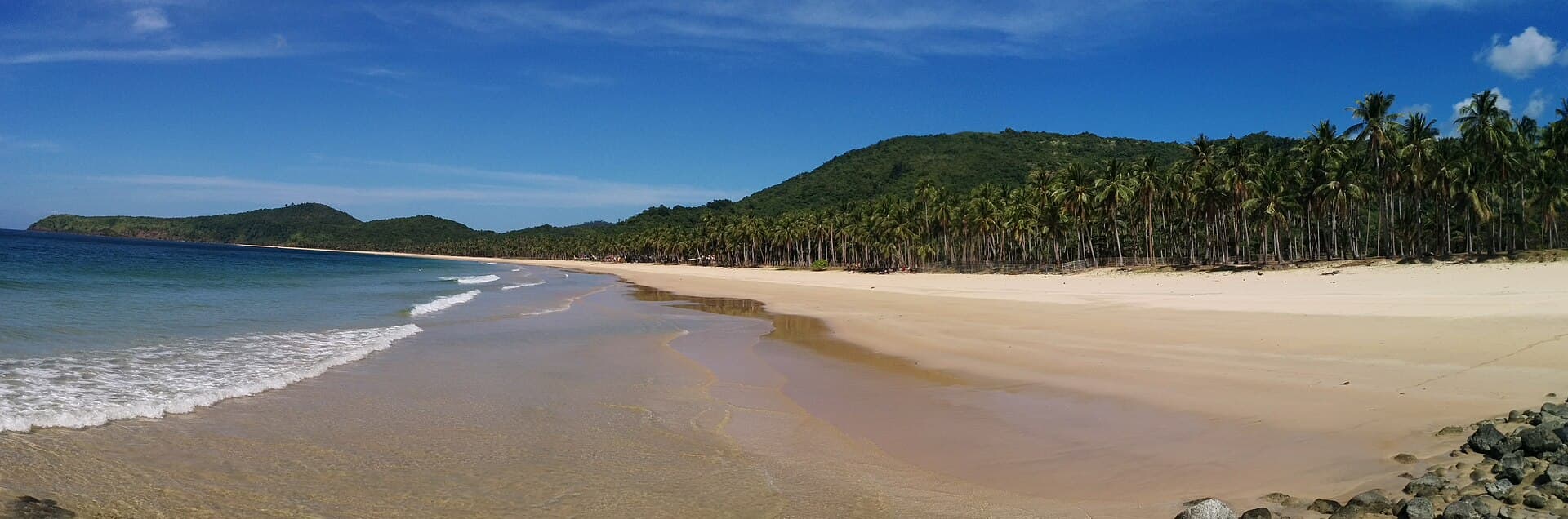
Lonely Planet calls Nacpan a 4 km crescent of creamy golden sand, just north of the karst-lined bay at El Nido. It is an easy 45-minute drive from El Nido town; the last stretch of road is muddy and bumpy but not difficult. Small huts along the sand sell food and drinks. A 2025 guide listed a 50 PHP entrance fee, and a 2026 guide says there is none, so carry the 50. Afternoon wind can build a small chop, and there are no lifeguards. Rough Guides finds it less crowded than its fame suggests. We measured 3,227 metres.
Best: June (30.0 °C), then May and August →
Philippines · Panglao, Bohol
No. 4
Alona Beach
Named after one naked run in 1973. Busy ever since.
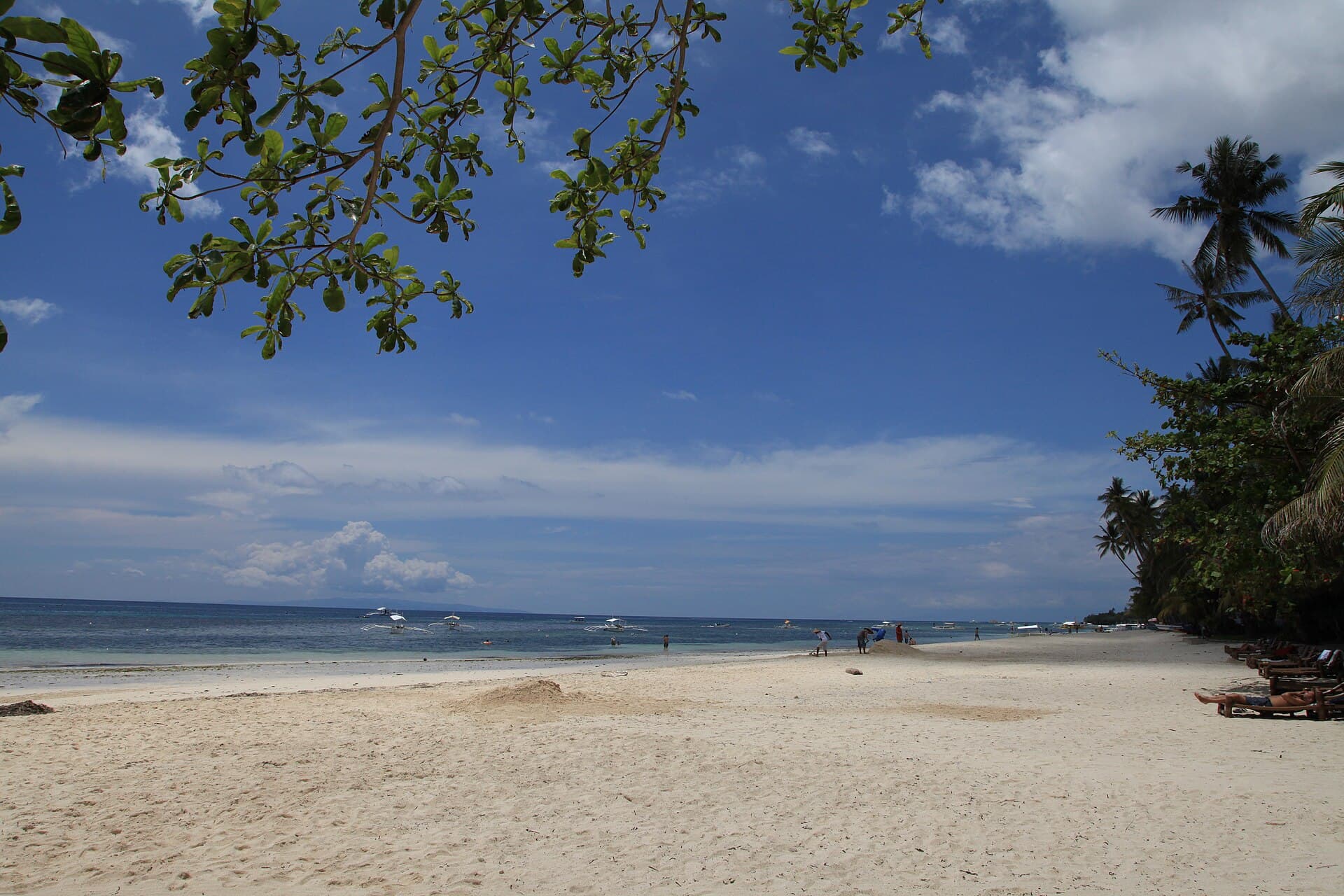
Alona Beach is named after the actress Alona Alegre, who ran naked along it in 1973 for the film Esteban. It sits at the south-west tip of Panglao Island, Bohol, about 2 km from Bohol-Panglao International Airport and 20 km from Tagbilaran port: white sand, rocky cliffs and a coral reef that makes it a popular dive spot. Lonely Planet says family-friendly resorts line it. A taxi from the Tagbilaran ferry terminal costs ₱500 to 600, a tricycle ₱350 to 450. The underwater current can be strong at times and turns the water cloudy. It is Panglao's most popular spot. We measured 837 metres.
Best: June and August (30.1 °C), then May →
No photo we can show yet
Philippines · Pagudpud, Luzon
No. 7
Saud Beach
Boracay before the beer towers, according to the neighbours.
Saud Beach is in Pagudpud, at the top of Luzon. Rough Guides says locals will happily remind you this is what Boracay looked like before the beer towers and bars moved in. Fly an hour from Manila to Laoag, then drive two hours. A modest number of guesthouses and restaurants are built as nipa huts. Wikivoyage calls it a heart-shaped cove popular with Filipino and foreign visitors. Typhoons often hit northern Luzon from July to September. We measured 1,570 metres.
Best: June (30.8 °C), then May and July →
No photo we can show yet
Philippines · Romblon
No. 10
Bonbon Beach
A beach with a walkway to the next island. The tide sets the hours.
Bonbon Beach is a short tricycle ride from the main town on Romblon. In 2025, says the Philippine Information Agency, it rose from 48th to 38th on a world top-50 beach list that called it a laid-back paradise known for the sandbar to Bangug Island. At low tide you can walk that sandbar to the islet. Lonely Planet calls it low-key, with soft sand and calm water. We measured 539 metres.
Best: May (30.5 °C), then June and August →
Australia · Cape Le Grand, Western Australia
No. 2
Lucky Bay
White sand, turquoise water, and the locals are kangaroos.
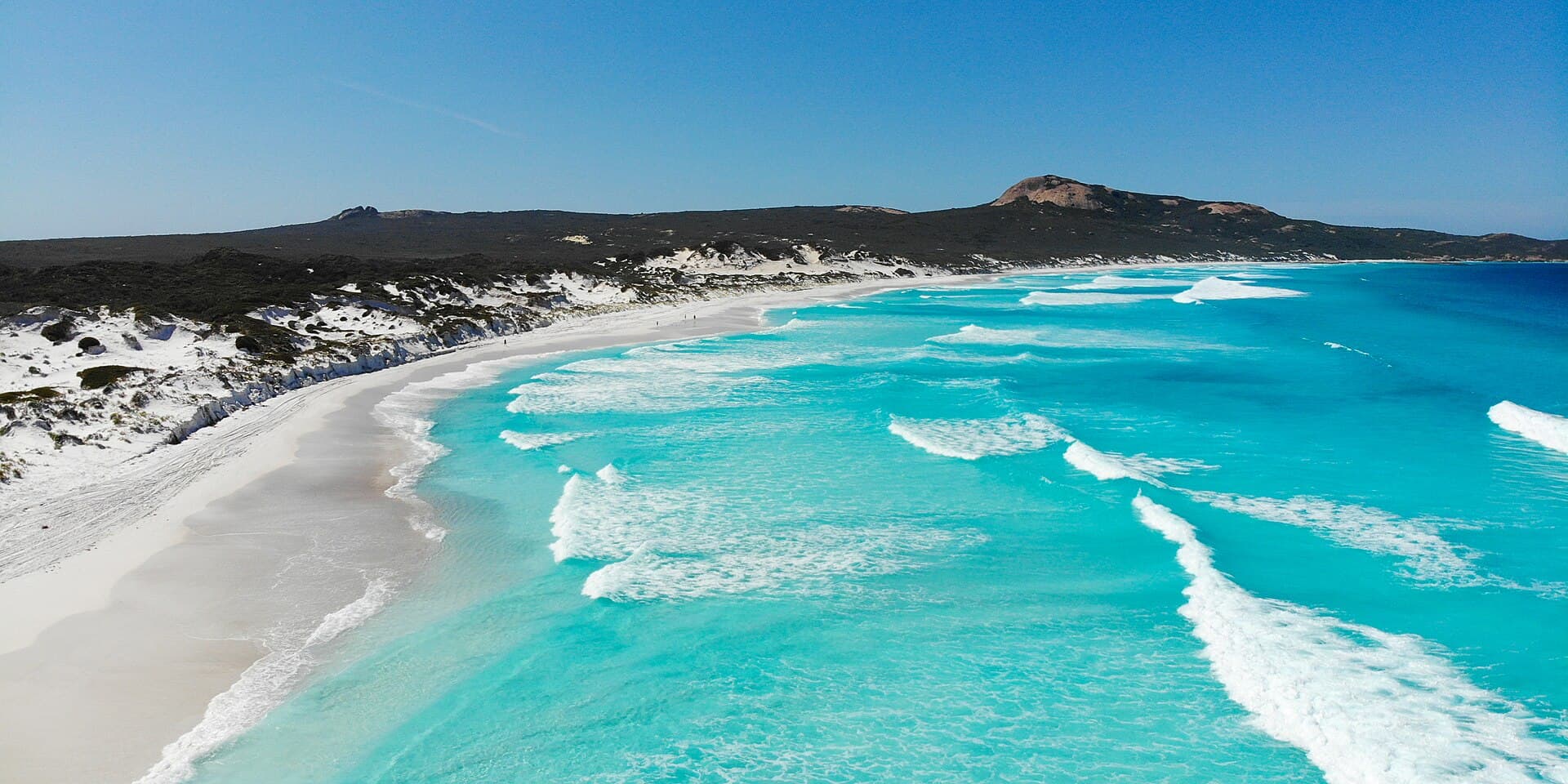
Lonely Planet says most visitors don't believe it until they see it: kangaroos bounding down a white sand beach. Lucky Bay is in Cape Le Grand National Park, 60 km from Esperance on Western Australia's south coast, known for bright white sand and turquoise water. There are basic toilets at the car park and a 56-site bush camping ground; a per-vehicle park entry fee and a camping fee apply. The park agency says the beaches are notoriously treacherous for vehicles, and it is easy to get bogged. It gets busy in summer. We measured 2,207 metres of sand, 117 metres wide on average.
Best: March (21.5 °C), then January and February →
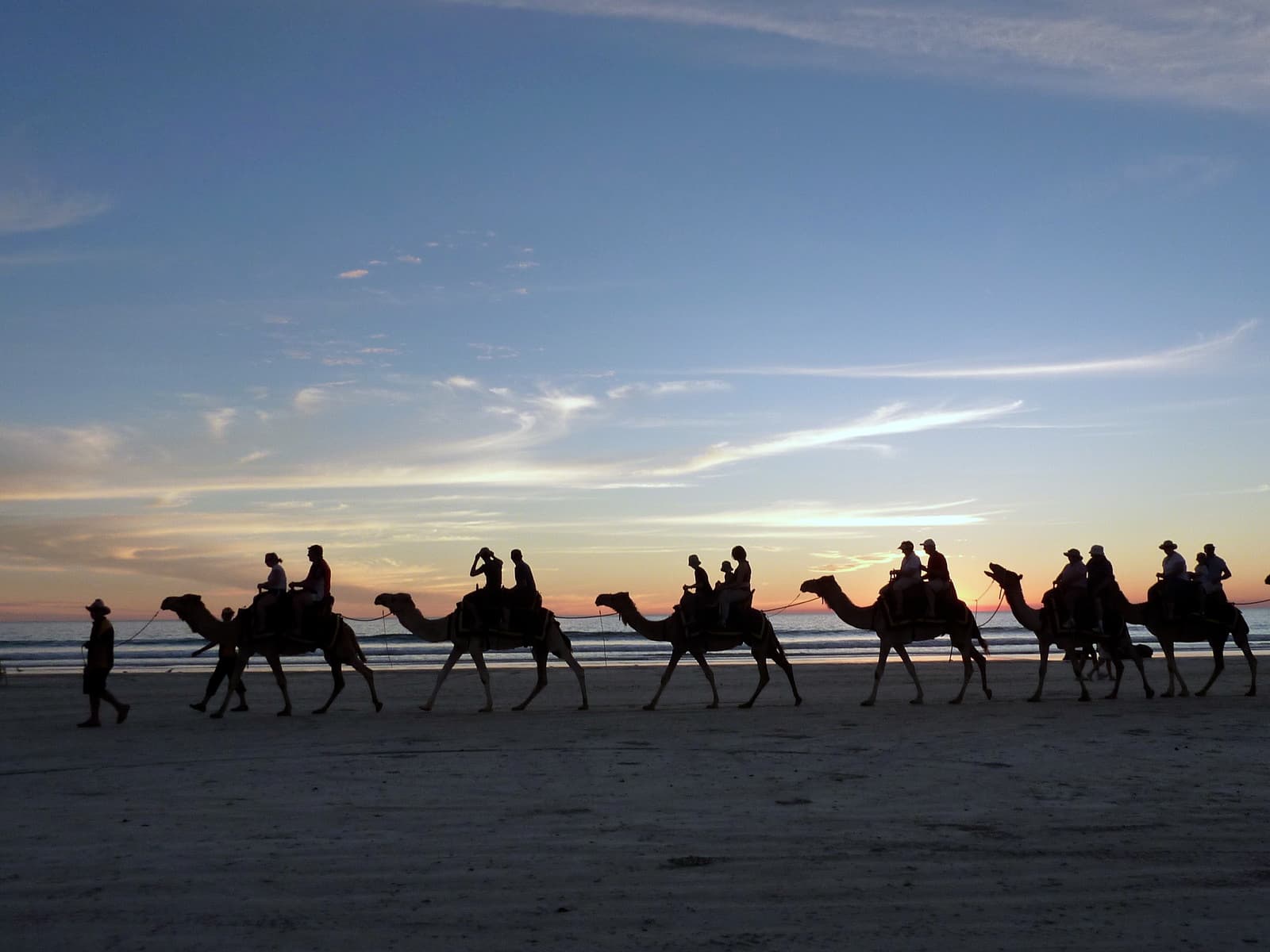
Australia · Broome, Western Australia
No. 4
Cable Beach
Twenty-two kilometres of white sand, named after a phone line.
Cable Beach is named after the telegraph cable laid between Broome and Java in 1889. It is a 22 km stretch of white sand on the Indian Ocean, a five-minute drive or 30-minute walk from Broome town centre, and Time Out notes it was ranked third best in the world in TripAdvisor's 2023 awards. There are toilets, a picnic area, a café and a car park; 4WDs may drive on the sand from the northern end of the car park. Box jellyfish may be present from November to April, so take care swimming then. At that length, there is room to find a quiet spot even in the busy dry season. The stretch we measured is 5,682 metres of the 22 km.
Best: March (32.7 °C), then January and December →
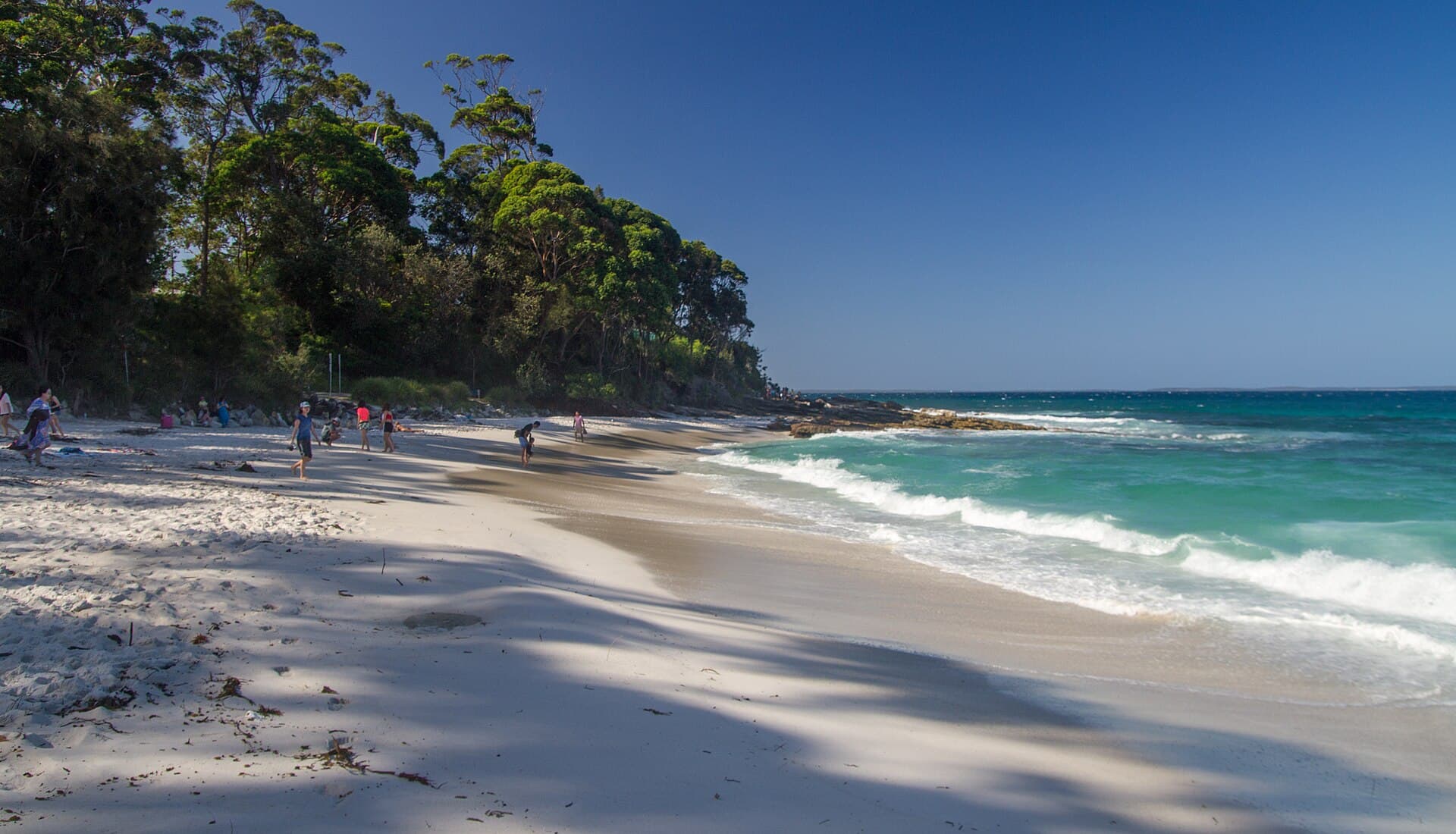
Australia · Jervis Bay, New South Wales
No. 5
Hyams Beach
The whitest sand in Australia, says the myth. The council says the village is full.
Wikipedia says there is a myth that Hyams Beach has the whitest sand in Australia. It is a village of 112 people on Jervis Bay, 180 km south of Sydney, and a 2.5-hour drive away. On a few summer evenings it swells to 4,000 people, and there is only one road in and out, so the council closes the village once the 450 street parking spaces are effectively full. There are toilets, a playground, a café and limited parking. We measured 2,710 metres of sand.
Best: January (21.9 °C), then February and March →
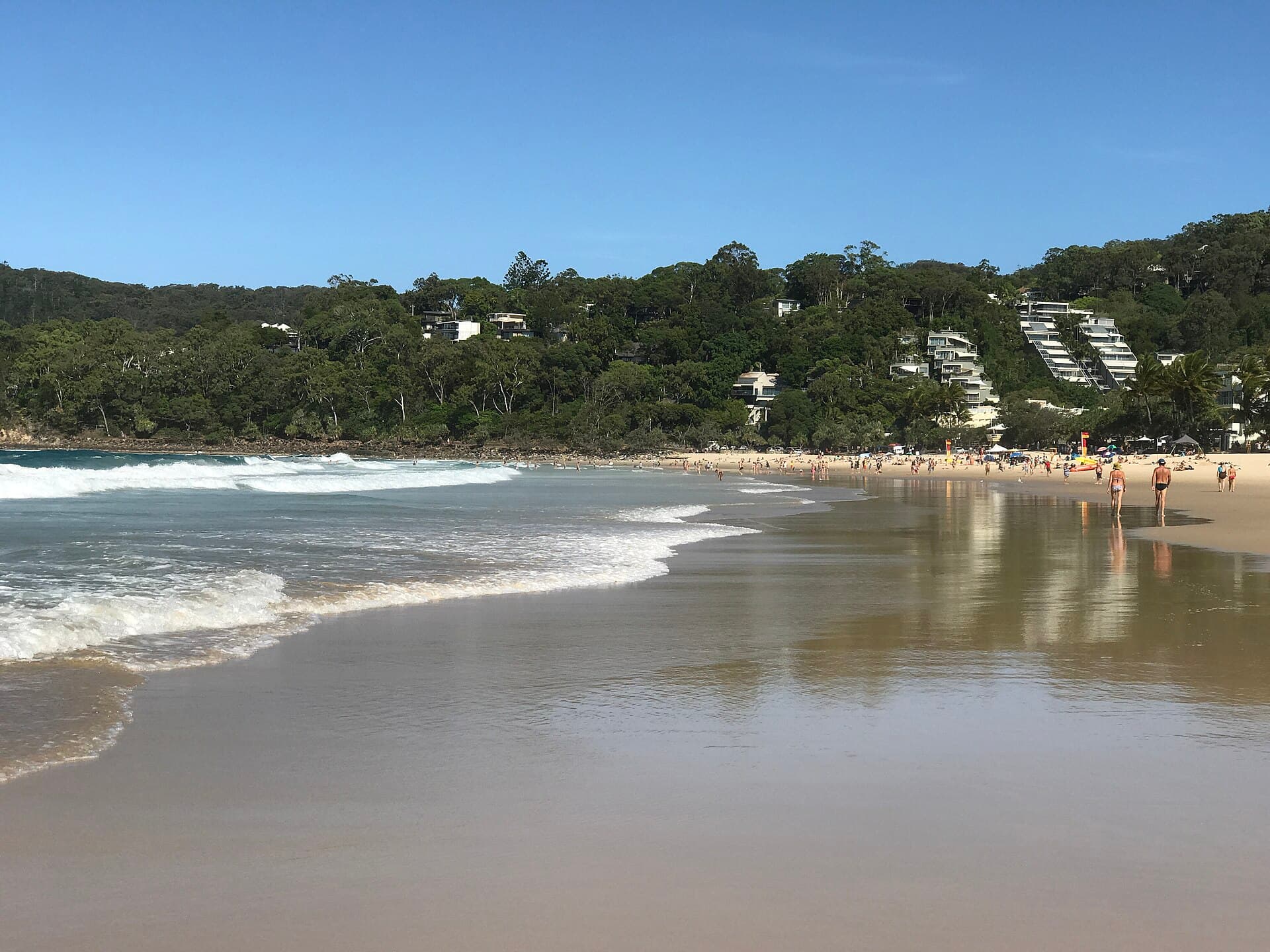
Australia · Noosa, Queensland
No. 6
Noosa Main Beach
The calm one, a minute from the cafés. Everyone else knows too.
Noosa Main Beach is the best choice for swimmers who need protection from the surf, says Noosa's own guide: it is patrolled, and the headland cuts the swell. It is a one-minute walk from Hastings Street, with toilets, showers, cafés, restaurants and the national park next door, and it is set up for accessible beach access. The trade-off is that it is the most crowded beach in the region. We measured 1,421 metres.
Best: February (27.2 °C), then January and March →
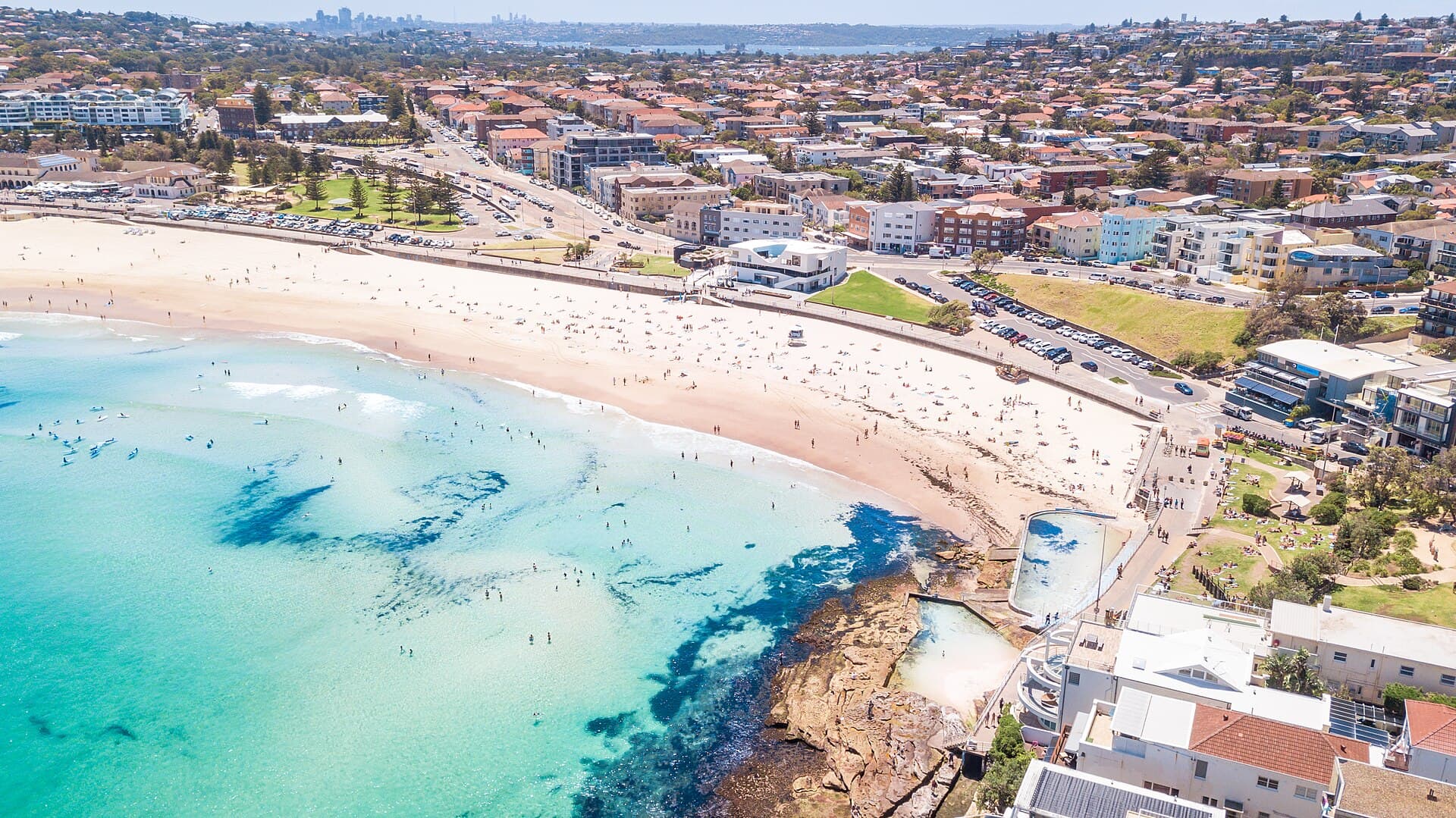
Australia · Sydney, New South Wales
No. 8
Bondi Beach
The pool at the end is as famous as the beach. Swim between the flags.
Bondi is 7 km east of Sydney's centre. At its southern end the turquoise Bondi Icebergs pool is as renowned as the beach itself, with hardy locals doing laps year-round as waves crash over the edge. The pavilion has public toilets, change rooms and showers. Parking nearby is limited, so take public transport. Dangerous rip currents occur here: always swim between the flags. Lonely Planet calls it crowded and overexposed, and also a place where people live their lives outdoors. Wikipedia gives it as about 1 km; we measured 868 metres.
Best: February (22.9 °C), then April and March →
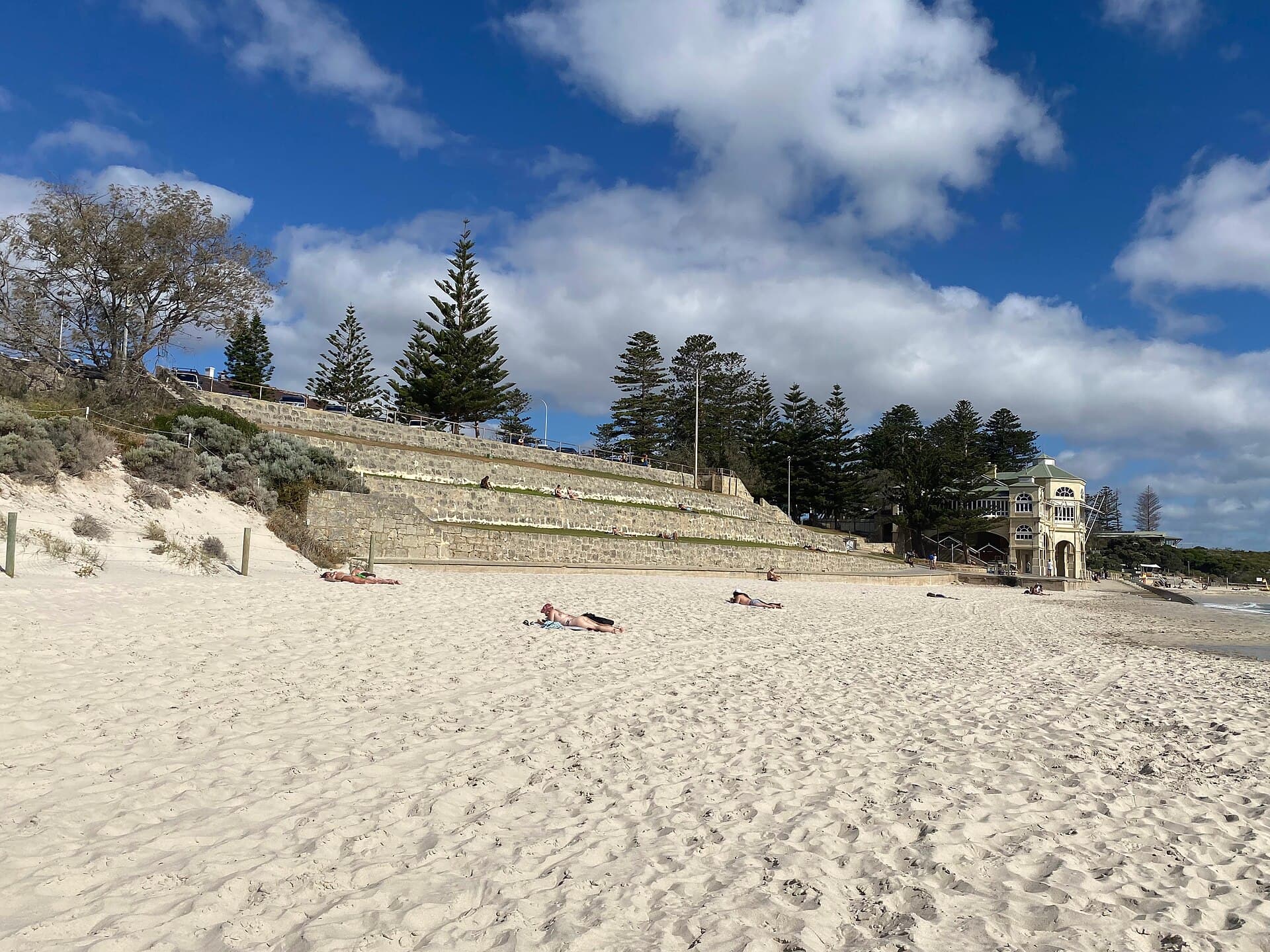
Australia · Perth, Western Australia
No. 9
Cottesloe Beach
Perth's own beach, 25 minutes from the city and 600,000 visits a year.
Cottesloe Beach, Mudurup in the Noongar language, is one of the most iconic places in Western Australia, a 25-minute drive from Perth's centre. Wikipedia puts visitors at around 600,000 a year, a figure it flags as needing a citation. There are toilets, showers, change rooms, cafés and restaurants. Wikipedia says the beach spans 1.5 km; the mapped stretch we measured is 388 metres.
Best: February (24.8 °C), then January and March →